The Journey That Broke America
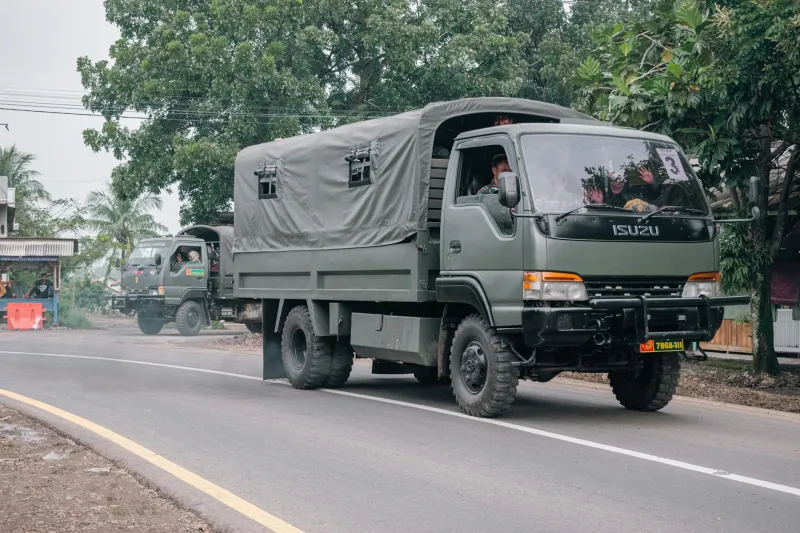
Lieutenant Colonel Dwight Eisenhower was 28 years old in 1919 when he volunteered for what seemed like a routine military exercise: accompanying a convoy of Army vehicles from Washington D.C. to San Francisco. The mission was supposed to demonstrate American military readiness and test the feasibility of cross-country vehicle transportation.
Instead, it became a 62-day nightmare that revealed just how unprepared America was for the automotive age. By the time the battered convoy limped into California, Eisenhower had witnessed firsthand the infrastructure crisis that would define his presidency three decades later.
When Roads Were Barely Suggestions
The 1919 Motor Transport Corps convoy consisted of 81 vehicles carrying 280 men across a country that had no real road system. What Americans called "highways" were often little more than dirt paths that turned to mud in rain and dust storms in dry weather.
The convoy's average speed was five miles per hour. Vehicles broke down constantly. Bridges collapsed under the weight of military trucks. In some areas, the roads were so bad that the convoy had to detour hundreds of miles out of their way or literally build new paths through wilderness.
Eisenhower watched in frustration as his country's transportation infrastructure failed at every turn. Trucks sank axle-deep in mud. Bridges built for horse-drawn wagons crumbled under motorized traffic. Simple mechanical failures stranded the entire convoy for days because spare parts had to be shipped by train to remote locations.
The European Revelation
Twenty-five years later, General Eisenhower was commanding Allied forces in Europe when he encountered something that reminded him of that disastrous 1919 convoy: Germany's autobahn system. The Nazis had built a network of high-speed, limited-access highways that allowed rapid movement of troops and supplies across the country.
Eisenhower was simultaneously impressed and alarmed. The German highway system was a military asset that had helped enable their early war successes. If America ever faced a similar conflict on its own soil, the country's inadequate road network would be a catastrophic vulnerability.
But Eisenhower also saw the civilian potential. The autobahn wasn't just military infrastructure—it was economic infrastructure that connected cities, enabled commerce, and unified the country in ways that railroads alone couldn't achieve.
The President Who Remembered Being Stuck
When Eisenhower became president in 1953, the 1919 convoy disaster was still fresh in his memory. America had won World War II despite its transportation limitations, but the Cold War presented new challenges that required rapid movement of people, goods, and military assets across continental distances.
Eisenhower proposed the Interstate Highway System not as a luxury but as a national security necessity. He framed it in terms that Congress couldn't ignore: America needed roads that could handle military traffic, evacuate cities during nuclear attacks, and connect defense installations across the country.
The Federal-Aid Highway Act of 1956 authorized the construction of 41,000 miles of interstate highways—the largest public works project in American history. But Eisenhower's vision extended far beyond military preparedness. He understood that highways would fundamentally reshape American society.
The Unintended Revolution
The interstate system accomplished its military objectives, but its civilian impact was far more dramatic than anyone anticipated. High-speed highways didn't just connect cities—they enabled entirely new ways of living, working, and consuming.
Suburban development exploded as commuting distances that had been impossible became routine. Families could live in quiet residential areas while working in urban centers. Shopping centers and malls emerged at highway interchanges, creating new retail ecosystems that bypassed traditional downtown business districts.
The highway system also democratized long-distance travel. Before interstates, cross-country trips were expensive, time-consuming ordeals that required careful planning and considerable mechanical knowledge. Afterwards, family road trips became a standard American experience.
The Fast Food Highway Economy
Perhaps no industry was more transformed by interstate highways than fast food. Restaurants like McDonald's, which had started as local California burger stands, suddenly had a pathway to national expansion along predictable, high-traffic corridors.
Highway interchanges became the new Main Streets of America. Standardized restaurant chains, gas stations, and motels clustered around highway exits, creating a new form of commercial architecture designed for automobile access rather than pedestrian traffic.
This highway-oriented development pattern spread far beyond restaurants. Shopping malls, office parks, and even entire cities were designed around automobile access, fundamentally changing the American landscape in ways that are still visible today.
The Cultural Highway
The interstate system didn't just change how Americans traveled—it changed how they thought about space, distance, and possibility. The open road became a powerful cultural symbol of freedom, opportunity, and American individualism.
Route 66, though eventually superseded by interstates, became mythologized as the "Mother Road" that connected small-town America to broader opportunities. The highway road trip became a rite of passage, celebrated in music, literature, and film as the quintessentially American experience.
This cultural transformation was particularly powerful because it was accessible to ordinary families. Unlike air travel or luxury rail service, highway travel was something that middle-class Americans could afford and control themselves.
The Suburban Nation
By the 1970s, the interstate highway system had enabled a complete reorganization of American settlement patterns. Suburbs weren't just bedroom communities anymore—they were becoming the dominant form of American development, with their own commercial centers, employment hubs, and cultural institutions.
This shift had profound economic implications. Traditional downtown areas lost retail and office tenants to highway-accessible suburban locations. Manufacturing moved to industrial parks near interstate interchanges where trucks could easily access national distribution networks.
The highway system had created a new form of American geography where location was measured not by proximity to railroads or waterways, but by access to high-speed road networks.
The Long Shadow of 62 Days
Eisenhower's interstate vision was ultimately about more than transportation—it was about reimagining what America could become. The 1919 convoy disaster had shown him a country limited by its inability to move efficiently across its own territory. The interstate system solved that problem so thoroughly that it created entirely new possibilities.
Today's America—with its suburban sprawl, chain restaurants, shopping malls, and car-dependent lifestyle—is largely a product of decisions made by a young Army officer who spent 62 miserable days watching vehicles break down on inadequate roads.
Every time you merge onto an interstate highway, you're entering a transportation network that exists because Eisenhower remembered being stuck in the mud for two months and decided that America deserved better. The most ambitious infrastructure project in American history began with a simple recognition: if you can't move, you can't grow.