The Backyard Kettle That Gave America Its Favorite Drink
The Backyard Kettle That Gave America Its Favorite Drink
You've probably cracked open a Coke without giving it a second thought. Maybe at a cookout, maybe with a slice of pizza, maybe at 2 p.m. on a Tuesday when the afternoon needed rescuing. It's just there — as American as anything gets. But the story of how it got there is anything but ordinary. It starts with a wounded soldier, a morphine habit, and a brass kettle bubbling in a backyard in Atlanta.
A Veteran With a Problem to Solve
John Stith Pemberton wasn't trying to build an empire. He was trying to survive one.
A Confederate officer who'd been slashed across the chest during the Battle of Columbus in 1865, Pemberton came home from the Civil War with a wound that wouldn't fully heal — and a dependency on morphine that was common among veterans of his era. Tens of thousands of men came back from that war hooked on the painkiller, and doctors of the time had few alternatives to offer. Pemberton, who was a trained pharmacist, decided to find one himself.
Throughout the late 1870s and early 1880s, he tinkered with various formulas, chasing a concoction that could dull pain, sharpen the mind, and wean him off the opiates. He wasn't alone in this pursuit — the era was awash in patent medicines, tonics, and elixirs that made extraordinary promises and delivered questionable results.
One of his early attempts was a drink he called Pemberton's French Wine Coca, a direct knockoff of a wildly popular European beverage called Vin Mariani — a Bordeaux wine infused with coca leaves. It sold reasonably well. Then Atlanta went dry.
The Prohibition Problem That Changed Everything
In 1886, Atlanta passed local prohibition laws that banned the sale of alcohol. Overnight, Pemberton's wine-based tonic became unsellable. Forced to reformulate, he stripped out the wine and started experimenting with a syrup base instead — something that could be mixed with water at a soda fountain.
The result, cooked up in a three-legged brass kettle in his backyard, was a dark, caramel-colored syrup made from a blend that included coca leaf extract, kola nut (a natural source of caffeine), and a mix of oils and flavorings that Pemberton never fully disclosed. He called it a "brain tonic" and believed it could treat headaches, exhaustion, and morphine dependency.
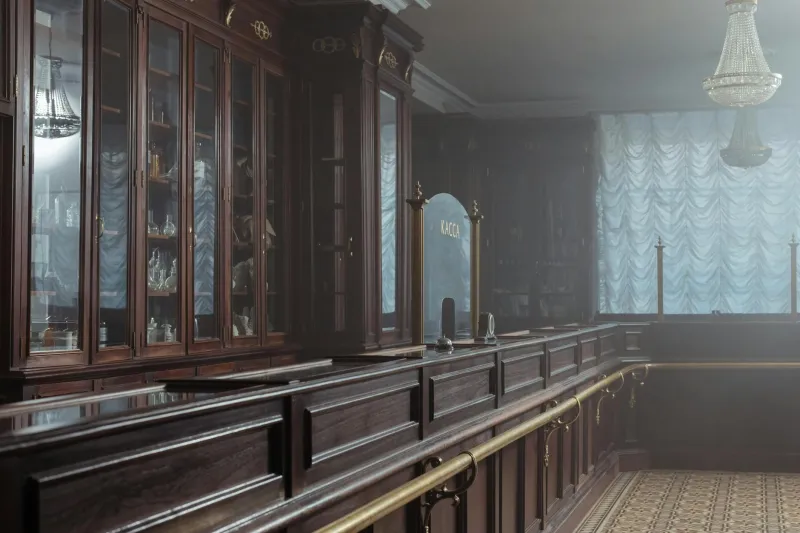
He brought the syrup to Jacobs' Pharmacy in downtown Atlanta, one of the city's most popular soda fountains, and began selling it for five cents a glass. At first, it was mixed with plain water. Then something happened that nobody planned.
The Clerk's Mistake That Made History
The exact story is disputed, as origin stories often are, but the most widely repeated version goes like this: a customer came in complaining of a headache and asked for Pemberton's syrup. The soda fountain clerk, either out of laziness or a misunderstanding, mixed the syrup with carbonated water instead of still water.
The customer loved it.
That accidental fizz — that tiny, unplanned substitution — gave the drink the character it still has today. Pemberton reportedly liked it too. The carbonated version became the standard.
His bookkeeper, Frank Robinson, came up with the name. He suggested "Coca-Cola," after the two main active ingredients, and wrote the now-iconic flowing script logo himself in his own handwriting. That logo, scrawled in 1886, has barely changed in nearly 140 years.
Pemberton Never Got to See What He'd Made
Here's the part of the story that tends to get left out: Pemberton died broke, and he died before Coca-Cola became anything close to what it is today.
Struggling financially and in declining health, he sold off portions of his formula and business rights to various investors throughout 1887 and 1888. By the time he died in August 1888, he'd sold nearly all of it. A businessman named Asa Candler eventually acquired full control of the Coca-Cola formula for around $2,300 — roughly $75,000 in today's money — and turned it into a national brand.
Candler was the one who scaled it up. He bottled it, marketed it aggressively, and pushed it into soda fountains across the country. By 1895, Coca-Cola was being sold in every state in the union.
Pemberton, the man who cooked the original syrup in his backyard, never saw a dime of that growth.
From Medicine Cabinet to Cultural Icon
For its first several decades, Coca-Cola was still marketed partly as a health product. Early ads promoted it as a cure for headaches and a nerve tonic. The coca leaf extract — which in those early years contained trace amounts of cocaine — wasn't removed from the formula until around 1903, when public concern about cocaine in consumer products started building.
The drink that remained was still loaded with caffeine from the kola nut, still sweet and carbonated and oddly compelling. And it spread — through soda fountains, through early bottling operations, through World War II when the U.S. military made Coca-Cola available to troops overseas as a morale boost, essentially introducing it to the world.
Today, Coca-Cola is sold in over 200 countries. The company's products are consumed roughly 2 billion times per day. The brand is so embedded in American identity that when the company briefly changed the formula in 1985 — the infamous "New Coke" debacle — the public outcry was so fierce that the original recipe was brought back within 79 days.
The Ordinary Miracle of a Bad Day
What's easy to miss in the Coca-Cola story is how much of it came down to circumstances nobody controlled. A war injury. A local liquor ban. A clerk who grabbed the wrong water. A bookkeeper who had nice handwriting.
Pemberton wasn't trying to create a cultural institution. He was trying to manage pain and stay solvent. The fact that his backyard experiment became the world's most recognized soft drink is one of those quiet reminders that history rarely goes according to anyone's plan — and that the most familiar things in our lives often have the strangest starting points.