When Two Engineers' Wallpaper Dream Became America's Favorite Pop
The Wallpaper That Wouldn't Stick
Marc Chavannes and Al Fielding had big dreams in 1957. The two engineers, working out of a garage in Hawthorne, New Jersey, were convinced they'd stumbled onto the next big thing in home decor: textured wallpaper that would give any room instant sophistication.
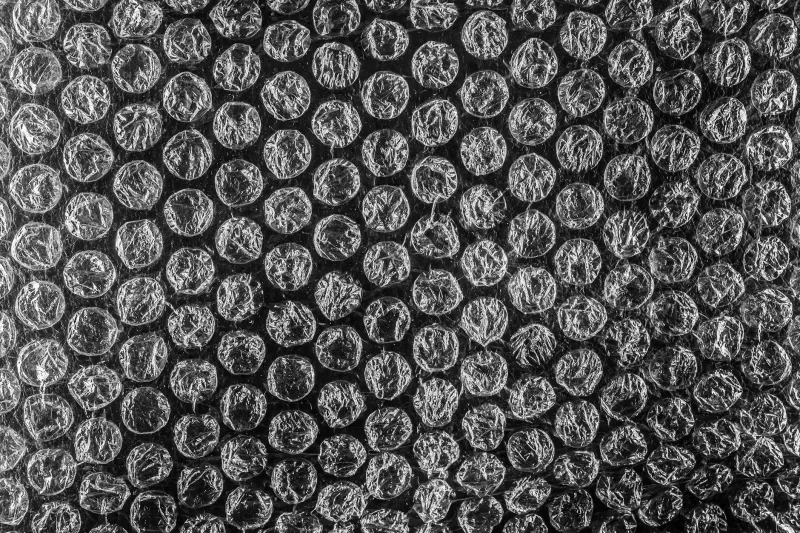
Their process seemed ingenious. They sealed two shower curtains together, trapping air bubbles between the plastic layers to create a three-dimensional surface. The result looked modern, felt interesting to the touch, and seemed perfect for the space-age aesthetic that was sweeping American homes.
There was just one problem: nobody wanted it.
Despite their enthusiasm, retailers weren't interested. Homeowners found the concept bizarre. The textured wallpaper that Chavannes and Fielding were so excited about sat in warehouses, a commercial flop that seemed destined for the dustbin of failed inventions.
From Wall Covering to Protective Wrapping
Most entrepreneurs might have given up, but Chavannes and Fielding weren't ready to abandon their air-filled creation entirely. If people didn't want it on their walls, maybe they could find another use for their accidental invention.
Their breakthrough came when they realized those trapped air bubbles could serve a completely different purpose: protection. In 1960, they founded Sealed Air Corporation and pivoted their failed wallpaper into something the world actually needed — packaging material.
The timing couldn't have been better. America was entering the consumer boom of the 1960s, and companies were shipping more fragile products than ever before. IBM became one of their first major customers, using the material to protect their new 1401 computers during shipping. What had failed as home decor succeeded spectacularly as industrial packaging.
The Sound That Launched a Thousand Pops
But something unexpected happened as Bubble Wrap (the name they trademarked in 1960) spread through American warehouses and shipping departments. Workers discovered that popping those little air-filled domes was oddly satisfying. What started as idle fidgeting during coffee breaks gradually evolved into a full-blown cultural phenomenon.
By the 1980s, Americans weren't just using Bubble Wrap for shipping — they were seeking it out specifically for the therapeutic joy of popping it. The material that had failed to decorate American homes had found its way into American hearts through an entirely different sensory experience.
The Science of Satisfaction
Researchers eventually got curious about America's Bubble Wrap obsession. What they found surprised even the scientists studying it. Dr. Kathleen Dillon at Western New England College conducted studies showing that popping Bubble Wrap actually reduces stress and increases alertness. The combination of tactile sensation, the satisfying 'pop' sound, and the visual confirmation of the flattened bubble creates what psychologists call a 'completion loop' — the brain's reward system firing because you've successfully finished a tiny task.
The research revealed something profound about human nature: we're wired to find satisfaction in small, controllable actions that produce immediate, predictable results. In a world full of complex, long-term challenges, Bubble Wrap offers the rare pleasure of instant gratification through destruction that's completely harmless.
From Accident to Institution
Today, Sealed Air Corporation produces enough Bubble Wrap each year to stretch from New York to Tokyo and back again. But the company's founders never could have predicted their invention's cultural impact. Bubble Wrap has inspired art installations, stress-relief apps that simulate the popping experience, and even an annual Bubble Wrap Appreciation Day (the last Monday in January, in case you're wondering).
The material shows up in unexpected places throughout American life. Teachers use it for sensory learning experiences. Physical therapists recommend it for finger exercises. Office workers keep sheets of it in desk drawers for moments when deadlines feel overwhelming.
The Accidental Genius of American Innovation
The Bubble Wrap story reveals something essential about how innovation actually works in America. The most transformative inventions often aren't the result of careful planning or market research — they're happy accidents that find their true purpose only after failing at their original mission.
Charvannes and Fielding's textured wallpaper joined a long list of American products that succeeded by failing first. Post-it Notes were the result of a weak adhesive that 3M couldn't figure out what to do with. Silly Putty emerged from a failed attempt to create synthetic rubber during World War II. Even the microwave oven came from an engineer who noticed his chocolate bar melting while working on radar technology.
Why We Still Pop
Sixty-plus years after its invention, Americans continue their love affair with Bubble Wrap. In an age of digital stress and constant connectivity, there's something beautifully analog about the simple pleasure of popping plastic bubbles. It requires no skill, produces no judgment, and offers immediate satisfaction.
Perhaps that's the real genius of Chavannes and Fielding's accidental creation. They didn't just invent packaging material — they created a tiny moment of zen that fits in your hands, costs almost nothing, and reminds us that sometimes the best solutions come from the most unexpected places.
The next time you encounter Bubble Wrap, remember: you're not just holding packaging material. You're experiencing one of America's happiest accidents, a failed wallpaper dream that became something far more valuable — a simple, satisfying reminder that the best inventions often have the most surprising origins.