The Wine Monk Who Thought Bubbles Were the Devil — Until He Tasted Heaven
The Problem That Wouldn't Go Away
In the rolling hills of France's Champagne region, Dom Pierre Pérignon had a serious problem on his hands. It was 1668, and the Benedictine monk was the cellar master at Hautvillers Abbey, responsible for producing wine that would fund the monastery's operations. But something kept going wrong.
Bottles were exploding in the cellars. Wine that seemed perfectly fine would develop strange bubbles, turning what should have been respectable still wine into something fizzy and unpredictable. For a perfectionist monk trying to create consistent, sellable wine, these bubbles were nothing short of a nightmare.
Pérignon wasn't alone in his frustration. Winemakers across the region were dealing with the same mysterious phenomenon. They called it the "devil's wine" — a batch gone bad, fit only for pouring down the drain.
The Science Nobody Understood
What Pérignon didn't know was that he was witnessing secondary fermentation in action. The cool temperatures of Champagne's winters would halt the fermentation process before all the grape sugars had converted to alcohol. When spring arrived and the cellars warmed up, the dormant yeast would wake up and start feeding on the remaining sugars — creating carbon dioxide as a byproduct.
In most wine regions, this wouldn't have been an issue. But Champagne's unique climate created the perfect storm: just cold enough to pause fermentation, just warm enough to restart it, and just the right timing to trap those bubbles in sealed bottles.
For decades, this had been considered a winemaking failure. Respectable wine wasn't supposed to have bubbles. That was for cider or beer — peasant drinks. Fine wine should be still, refined, and predictable.
The Moment Everything Changed
Legend has it that one autumn evening in the 1690s, Pérignon was doing his usual rounds in the cellars when he decided to taste one of the problematic bottles instead of immediately discarding it. What happened next would change the course of beverage history.
According to the story passed down through generations, when his fellow monks asked what he tasted, Pérignon replied: "I am drinking the stars."
Whether those exact words were spoken or not, something profound happened in that moment. Instead of tasting failure, Pérignon experienced something extraordinary — a wine that danced on the tongue, that seemed to sparkle with life, that felt celebratory in a way no still wine ever had.
From Accident to Art
What makes Pérignon's story remarkable isn't just that he recognized the potential in his "failed" wine — it's what he did next. Instead of simply accepting the happy accident, he became obsessed with perfecting it.
He began experimenting with different grape varieties, developing the blend of Chardonnay, Pinot Noir, and Pinot Meunier that would become the foundation of great champagne. He pioneered the use of thicker glass bottles that could withstand the pressure of carbonation. He even developed the punt — that distinctive indentation at the bottom of champagne bottles — to help distribute pressure more evenly.
Most importantly, Pérignon figured out how to control secondary fermentation, turning a random accident into a repeatable process. He was essentially reverse-engineering a mistake, trying to understand how to make it happen on purpose.
The Journey to America
For nearly two centuries, champagne remained largely a European luxury. But everything changed in the mid-1800s when French champagne houses began aggressively marketing to wealthy Americans.
The timing was perfect. America's Gilded Age was in full swing, and newly rich industrialists were eager to display their sophistication. Champagne became the ultimate status symbol — French, exclusive, and impossibly elegant.
By the early 1900s, champagne had become synonymous with American celebration. New Year's Eve, weddings, business deals, ship christenings — if it was worth celebrating, it was worth celebrating with champagne.
The Monk's Accidental Legacy
Today, Americans consume over 20 million bottles of champagne annually, and that number doubles during wedding season. What started as Dom Pérignon's winemaking headache has become a $5 billion global industry.
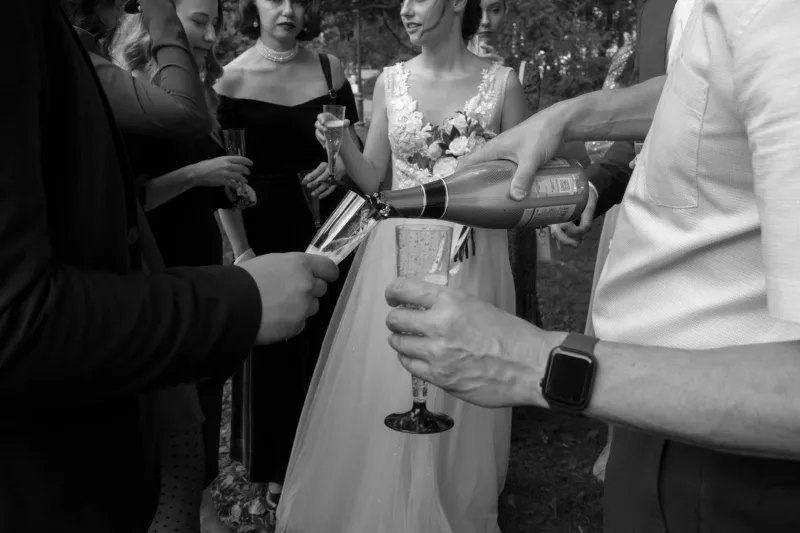
Every time someone pops a champagne cork at a New Year's Eve party in Times Square, or toasts at a wedding reception in Ohio, or celebrates a promotion in Silicon Valley, they're participating in a tradition that began with a frustrated monk who thought bubbles were ruining his wine.
The irony isn't lost on modern champagne makers. The very thing that Pérignon spent years trying to eliminate — those unpredictable, mysterious bubbles — became the defining characteristic of one of the world's most celebrated beverages.
Stars in a Glass
Pérignon died in 1715, long before he could see how his accidental discovery would shape celebration culture around the world. But his legacy lives on every time someone raises a glass of champagne and feels that distinctive effervescence.
The monk who thought he was tasting stars had actually created them — turning a winemaking mistake into liquid celebration, one bubble at a time. Sometimes the best discoveries happen when we stop trying to fix what's "broken" and start appreciating what makes it unique.