From Button Sewers to Banned Vice: The Sewing Machine Accident That Built America's Arcade Empire
The Broken Needle That Started Everything
David Gottlieb never intended to become the father of American arcade culture. In 1931, he was just a businessman running a small company that manufactured coin-operated sewing machines for New York City's garment district. For a nickel, workers could use his machines to quickly attach buttons to clothing—a simple service that saved time and hassle in the city's bustling textile shops.
 Photo: David Gottlieb, via davidgottliebny.com
Then one of his machines broke in an unexpected way. The needle mechanism jammed, but the coin mechanism kept working. Instead of fixing it immediately, Gottlieb watched something fascinating happen: customers kept feeding it nickels anyway, apparently entertained by the random clicking and mechanical sounds the broken machine produced.
That broken sewing machine gave Gottlieb an idea that would accidentally create an entire industry.
The Pivot to Play
Gottlieb realized he was in the wrong business. People didn't just want functional machines—they wanted to be entertained. He began experimenting with devices designed purely for amusement, creating mechanical games that responded to player input with lights, sounds, and scoring mechanisms.
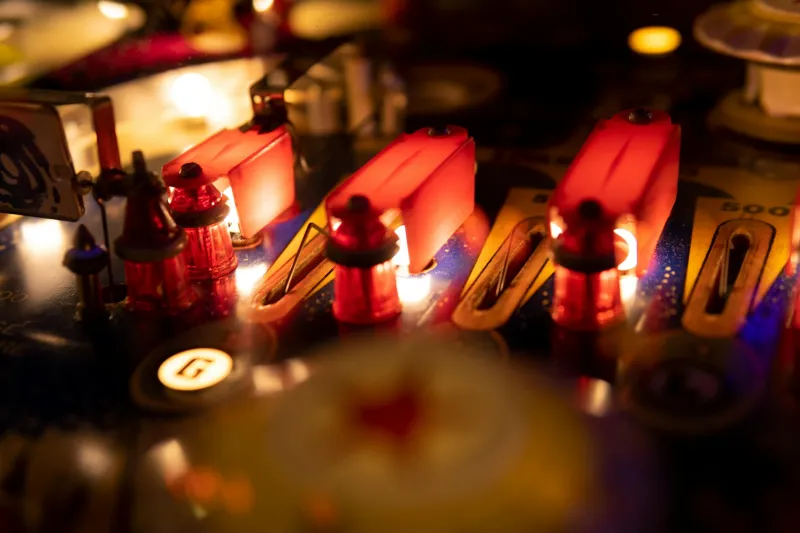
His breakthrough came with "Baffle Ball," a tabletop game featuring a sloped playfield, holes worth different point values, and a spring-loaded plunger that shot small metal balls across the surface. Players could influence the ball's path by nudging the machine, but couldn't control it completely. The element of skill mixed with chance proved irresistible.
Within months, Gottlieb was selling thousands of these "pin games" to penny arcades, drugstores, and taverns across America. He had accidentally discovered that Americans were hungry for interactive entertainment that cost just a nickel and delivered immediate gratification.
The Moral Panic
But Gottlieb's success created an unexpected problem. As pinball machines spread across New York City, they attracted the attention of moral reformers who saw them as something far more sinister than harmless entertainment.
The machines operated on coins. They involved chance. Players could win free games. To critics, this looked suspiciously like gambling—a vice that reformers had spent decades trying to eliminate from American cities. The fact that pinball machines were often found in the same establishments as slot machines and other gambling devices didn't help their reputation.
Mayor Fiorello La Guardia became pinball's most famous enemy. In 1942, he declared the machines a "racket" that corrupted youth and drained money from working families. In a dramatic publicity stunt, La Guardia personally wielded a sledgehammer to destroy confiscated pinball machines, dumping the wreckage into Long Island Sound.
 Photo: Long Island Sound, via longislandsoundstudy.net
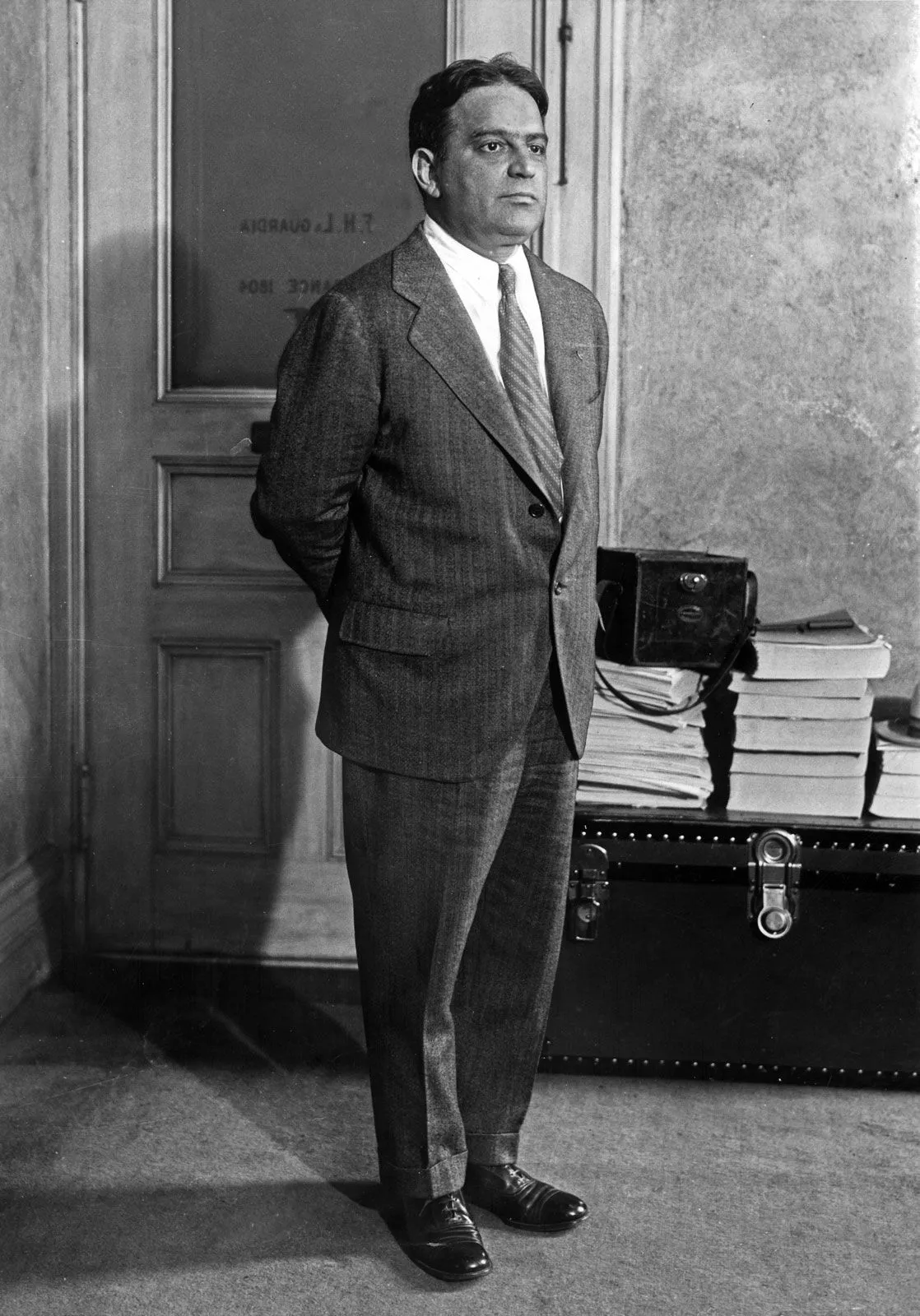 Photo: Fiorello La Guardia, via cdn.britannica.com
The Great Pinball Ban
New York City's pinball ban lasted 34 years, from 1942 to 1976. During this time, the machines were literally illegal within city limits—police would raid establishments and confiscate any pinball games they found. The ban spread to other cities across America, creating a bizarre situation where pinball existed in a legal gray area, thriving in some places while being criminalized in others.
The irony was profound: a game that originated from a broken sewing machine in New York's garment district had been exiled from the very city where it was born. Pinball manufacturers like Gottlieb were forced to operate like bootleggers, selling their products to jurisdictions where they remained legal while avoiding the major urban markets where they were banned.
The Skill vs. Chance Debate
The legal battle over pinball centered on a fundamental question: was it a game of skill or a game of chance? If chance dominated, it was gambling and therefore illegal in most jurisdictions. If skill mattered more, it was legitimate entertainment protected under the law.
Pinball manufacturers spent decades trying to prove their games required genuine skill. They added flippers, bumpers, and other features that gave players more control over the ball's movement. They created complex scoring systems that rewarded precise shots and strategic thinking. But critics remained unconvinced, arguing that the random bounce of the ball made skill irrelevant.
The Courtroom Vindication
The turning point came in 1976, when pinball champion Roger Sharpe agreed to demonstrate the game's skill requirements in a New York City courtroom. With reporters, lawyers, and city officials watching, Sharpe stepped up to a pinball machine and announced exactly what he intended to do: shoot the ball through the center lane to activate a specific feature.
He pulled back the plunger, released it, and executed the shot perfectly. The ball traveled exactly where Sharpe had predicted, proving beyond doubt that pinball rewarded skill and precision. The demonstration was so convincing that the New York City Council voted to overturn the 34-year ban immediately.
The Modern Legacy
Today, pinball enjoys a renaissance that Gottlieb never could have imagined. Modern machines feature computer-controlled displays, elaborate sound systems, and complex rule sets that would have seemed like science fiction in the 1930s. But they all trace their lineage back to that broken sewing machine in a cramped New York workshop.
The pinball industry's journey from practical sewing aid to banned vice to beloved entertainment reveals something important about American culture's relationship with play. The same machines that were once considered a threat to social order are now celebrated as examples of mechanical artistry and interactive design.
Every time you hear the distinctive sound of a pinball machine—the metallic ping of bumpers, the satisfying thunk of flippers, the electronic celebration of a high score—you're experiencing the legacy of David Gottlieb's broken needle. What began as a sewing machine malfunction became a multi-billion-dollar entertainment industry, proving that sometimes the best innovations come from the most unexpected accidents.
The next time you see a pinball machine in a bar or arcade, remember: you're looking at the descendant of a 1930s sewing machine that couldn't sew buttons anymore but somehow learned to capture the American imagination instead.