The Mortician's Dilemma
In 1876, Philadelphia undertaker William Baxley faced a crisis of confidence. Families were increasingly suspicious of embalming—a relatively new practice that many Americans found disturbing and unnatural. Grieving relatives needed reassurance that this unfamiliar procedure was both safe and respectful, but Baxley had no template for building trust with people in their most vulnerable moments.
His solution would accidentally revolutionize how Americans interact with professional service providers.
Designing Comfort for the Uncomfortable
Baxley's funeral parlor became a laboratory for what we now call customer experience design. He realized that everything about his establishment needed to communicate trustworthiness and competence to people who had never dealt with professional death care before.
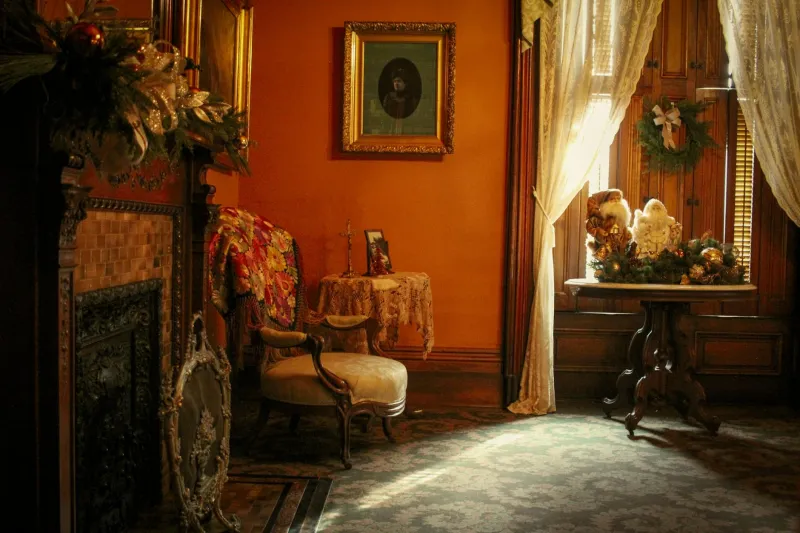
First came the waiting room. Unlike the stark, utilitarian spaces common in most 19th-century businesses, Baxley created an environment that felt more like a well-appointed home parlor. Soft lighting replaced harsh gas fixtures. Comfortable chairs were arranged in conversational groupings rather than formal rows. Fresh flowers and tasteful artwork created an atmosphere of calm dignity.
But the physical space was only the beginning.
The Birth of the Professional Greeting
Baxley trained his staff in what he called "appropriate solemnity"—a careful balance of warmth and respect that acknowledged grief while projecting confidence. Employees were instructed to approach families with a specific sequence: a gentle greeting, an expression of sympathy, and an immediate offer of assistance.
This scripted interaction served a practical purpose. Families dealing with death were often overwhelmed and uncertain about procedures they'd never encountered. A standardized, compassionate greeting helped orient them and established the funeral director as a knowledgeable guide through an unfamiliar process.
Other funeral homes quickly adopted similar approaches. By the 1880s, the funeral industry had developed sophisticated protocols for managing first impressions, controlling environmental factors, and using verbal and non-verbal communication to build trust with distressed customers.
The Migration Begins
The techniques proved so effective that they caught the attention of other service industries dealing with anxious customers. Banks were among the first to adapt funeral parlor strategies.
In the 1890s, as banking became more complex and intimidating to ordinary Americans, financial institutions began borrowing from morticians' playbook. They redesigned lobbies to feel more welcoming, trained tellers in gentle customer interaction, and adopted the funeral industry's practice of approaching customers with immediate offers of assistance.
Hotels followed suit. The growing railroad network was bringing unprecedented numbers of travelers to unfamiliar cities, and hotel managers recognized that these displaced guests needed the same kind of reassurance that funeral directors provided to grieving families.
Professionalizing Warmth
By the early 1900s, what had begun as funeral parlor innovations had become standard practice across American service industries. The "professional greeting"—that specific combination of warmth, competence, and helpful availability—became the foundation of customer service training.
Retail stores adopted the funeral industry's environmental strategies: soft lighting to create comfort, strategic furniture placement to encourage lingering, and the careful use of scents and sounds to influence mood. The goal was always the same: help customers feel at ease during potentially stressful interactions.
Even the language of customer service borrowed from mortuary practices. Phrases like "How may I assist you?" and "Please let me know if you need anything" originated in funeral parlors, where staff needed to offer help without seeming pushy or insensitive.
The Psychology of Professional Trust
What funeral directors had discovered—and what other industries learned from them—was that trust develops through small, consistent signals rather than grand gestures. A gentle tone of voice, appropriate eye contact, and genuine attention to customer needs created confidence more effectively than elaborate sales pitches or aggressive marketing.
This insight transformed American business culture. The funeral industry's emphasis on dignified professionalism established expectations that customers carried into every other commercial interaction. Americans began to expect—and businesses felt pressure to provide—the same level of attentive, respectful service everywhere.
The Unintended Legacy
Today's customer service industry employs millions of Americans trained in techniques that trace directly back to 19th-century funeral parlors. The warm smile from your bank teller, the helpful greeting at retail stores, the carefully designed ambiance of hotel lobbies—all evolved from morticians' efforts to comfort grieving families.
Modern customer experience design still relies on principles that William Baxley and his contemporaries developed: create physical environments that reduce anxiety, train staff in empathetic communication, and approach every interaction with the assumption that customers might be feeling vulnerable or uncertain.
Death's Quiet Revolution
The irony is striking. The warm, professional courtesy that Americans now consider normal business behavior originated in the nation's most somber industry. Funeral directors, dealing daily with life's ultimate anxiety, became inadvertent pioneers of customer psychology.
Every time you experience genuinely helpful service—when a store employee approaches with a smile, when a hotel desk clerk makes you feel welcomed, when a bank representative treats your concerns with respectful attention—you're benefiting from innovations developed to help families navigate their darkest hours.
The funeral industry taught America that professional service could be both efficient and deeply human. That lesson, born from necessity in parlors designed for grief, quietly revolutionized how an entire nation learned to treat its customers.