How a Failed Headache Cure Became the World's Most Famous Drink
The Pharmacist with a Problem
John Stith Pemberton had a serious problem in 1886. The 54-year-old Atlanta pharmacist was hooked on morphine—a common affliction among Civil War veterans who'd been treated with the drug for battlefield injuries. Desperate to break free from his addiction, Pemberton began experimenting with various concoctions in his backyard, searching for a cure that might also treat the headaches that plagued him.
What he created instead would change the world forever.
The Accidental Mix That Changed Everything
Pemberton's laboratory was a cluttered mess of bottles, extracts, and experimental brews. His latest creation was a dark, sweet syrup made from coca leaves (yes, the same plant that produces cocaine), kola nuts, vanilla, and a secret blend of oils and extracts. He called it "Pemberton's French Wine Coca" and marketed it as a cure-all for everything from headaches to impotence.
But Atlanta had a problem with Pemberton's wine-based medicine: the city was going dry. Local temperance laws were making alcohol-based tonics increasingly unpopular. Pemberton needed to adapt, fast.
One afternoon in May 1886, Pemberton brought a jug of his syrup to Jacobs' Pharmacy, a popular soda fountain on Atlanta's Peachtree Street. The plan was simple—mix the syrup with plain water and sell it as a non-alcoholic medicine. But when his assistant accidentally grabbed the carbonated water instead of still water, something magical happened.
The fizzy, bubbly mixture tasted incredible.
From Medicine to Refreshment
Frank Robinson, Pemberton's business partner and bookkeeper, tasted the accidental creation and immediately saw its potential—not as medicine, but as a refreshing drink. Robinson, who had a flair for marketing, suggested they call it "Coca-Cola," thinking the two C's would look good in advertising.
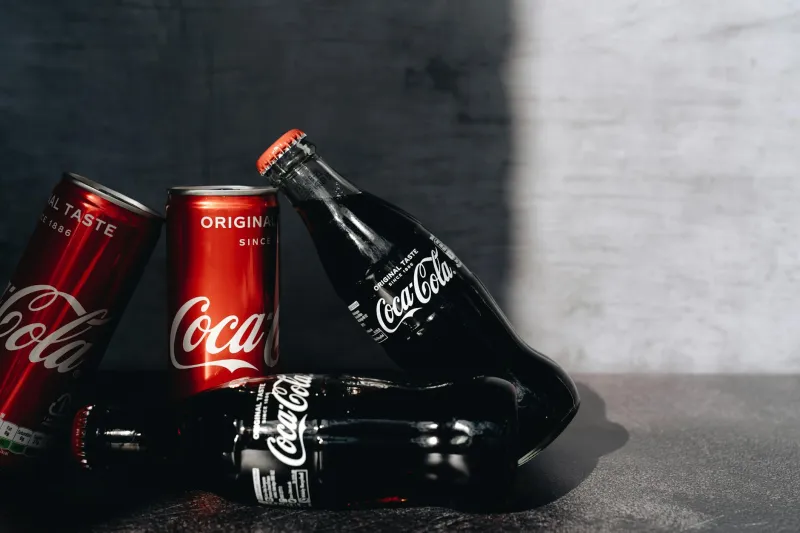
Using his flowing script handwriting, Robinson penned the now-famous Coca-Cola logo that same day. It was a logo so perfect that the company still uses nearly the identical design more than 135 years later.
They sold their first glass on May 8, 1886, for five cents. By the end of that year, they'd sold about nine glasses per day—hardly the makings of a business empire.
The Secret Ingredient Nobody Talks About
Here's what most people don't know: early Coca-Cola actually contained cocaine. Not much—about nine milligrams per glass, roughly equivalent to one-sixteenth of a line of the drug. But it was there, extracted from the coca leaves that Pemberton used in his original formula.
For nearly two decades, Americans were unknowingly consuming a mildly psychoactive beverage. The cocaine gave drinkers a subtle energy boost, which helped establish Coke's reputation as a pick-me-up drink. But as public awareness of cocaine's dangers grew in the early 1900s, the Coca-Cola Company quietly began removing the active ingredient.
By 1929, the cocaine was completely gone, replaced by a "spent" coca leaf extract that provided flavor without the drug. Most customers never noticed the change—the drink's popularity continued to soar.
The Accidental Empire
Pemberton, unfortunately, never lived to see his accidental creation become a global phenomenon. Struggling with poor health and mounting debts, he sold his rights to the formula for $2,300 in 1888—less than two years after creating it. He died that same year, probably never imagining that his failed headache cure would one day be worth billions.
Asa Griggs Candler, a fellow Atlanta pharmacist, bought the rights and transformed Coca-Cola from a local curiosity into a national brand. Candler understood what Pemberton had missed: this wasn't medicine anymore. It was refreshment, pleasure, and happiness in a bottle.
The Formula That Conquered the World
Today, Coca-Cola is consumed more than 1.9 billion times per day across more than 200 countries. The company is worth over $240 billion, and the original formula—modified slightly over the years but still recognizable—remains one of the world's most closely guarded trade secrets.
What started as one man's desperate attempt to cure his own addiction accidentally created something far more powerful: a global symbol of American culture, a marketing juggernaut, and proof that sometimes the best discoveries happen when you're not looking for them.
The next time you crack open a Coke, remember: you're drinking the result of a happy accident in an Atlanta pharmacy, where a failed medicine became the world's favorite soft drink—one carbonated mistake at a time.