Lost at Sea: How Maritime Confusion Gave America Its Politest Rejection
When the Sea Shaped the Land
Every day, millions of Americans politely defer plans with a simple phrase: "I'll take a rain check." We use it so automatically that it feels like ancient wisdom, something humans have always said when postponing social obligations. But this quintessentially American expression has surprisingly nautical origins, born from the confusion and uncertainty of 19th-century maritime commerce.
The story begins not in baseball stadiums, as many assume, but in the bustling ports and traveling exhibitions that defined American entertainment before radio and television.
The Maritime Marketplace
In the 1850s and 1860s, America's entertainment industry was largely mobile. Traveling circuses, medicine shows, and exhibitions moved from town to town, setting up temporary venues and selling tickets for performances that might be delayed or canceled due to weather, transportation problems, or insufficient attendance.
These traveling shows operated much like maritime commerce, where weather delays and uncertain schedules were constant challenges. Ship captains issued various forms of documentation—bills of lading, promissory notes, and weather delays certificates—to manage the chaos of unpredictable departures and arrivals.
The language of the docks naturally influenced how traveling entertainers handled their own scheduling uncertainties.
The Paper Trail of Postponement
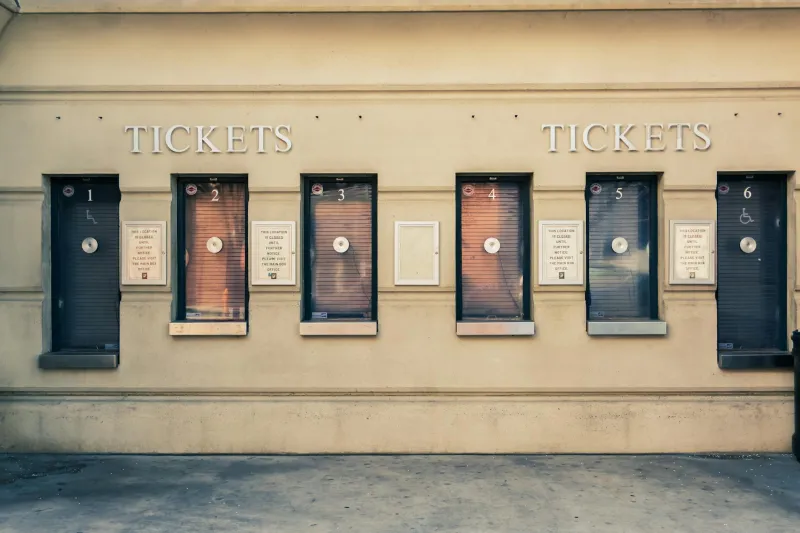
When outdoor exhibitions faced rain delays, operators began issuing small paper certificates that promised admission to a future performance. These weren't called "rain checks" initially—early versions were labeled "weather certificates," "postponement vouchers," or "future admission slips."
The maritime influence was clear in the formal language used on these early certificates. They included phrases like "bearer entitled to passage," "valid for next available sailing," and "good weather permitting"—language lifted directly from shipping documents.
Traveling show operators, many of whom had worked in port cities or had maritime experience, naturally adopted the documentation practices they knew from dock commerce. The idea of issuing paper promises for future service was already well-established in maritime trade.
Baseball's Borrowed Solution
When baseball emerged as America's national pastime in the 1870s and 1880s, team owners faced the same weather-related challenges as traveling exhibitions. Early baseball was played entirely outdoors, and rain could ruin a day's revenue.
Team owners, observing how traveling shows handled weather delays, adopted similar practices. They began issuing small paper certificates that guaranteed admission to a makeup game when rain canceled or interrupted play.
By the 1880s, these certificates were commonly called "rain checks," and the phrase began entering everyday American speech. Baseball's popularity helped spread the term beyond entertainment venues into general conversation.
From Tickets to Talk
The transition from literal rain checks to metaphorical usage happened gradually through the 1890s and early 1900s. Americans began using "taking a rain check" to describe any postponement of social plans, whether weather-related or not.
The phrase perfectly captured the American preference for polite deferral over direct rejection. Instead of saying "no," Americans could say "I'll take a rain check," which implied future interest while avoiding immediate commitment.
This linguistic evolution reflected broader changes in American social customs. As the country became more urban and formal social etiquette became important, people needed diplomatic ways to decline invitations without causing offense.
The Maritime Echo
What's remarkable about "taking a rain check" is how it preserved maritime commercial language in everyday American speech. The phrase maintains the transactional nature of its origins—you're not just postponing, you're accepting a form of social credit that can be redeemed later.
This reflects the deep influence of commercial maritime culture on American social customs. The language of trade, with its emphasis on formal agreements and future obligations, became the language of politeness.
Other maritime expressions followed similar paths into American conversation: "above board," "cut and run," "know the ropes," and "loose cannon" all migrated from ship decks to everyday speech, carrying the precision and formality of nautical commerce into social interaction.
The Modern Rain Check
Today, "taking a rain check" has become one of America's most versatile social tools. It allows people to decline invitations gracefully, postpone difficult conversations diplomatically, and maintain relationships while avoiding immediate commitments.
The phrase appears in American conversation roughly 200 million times annually, according to linguistic researchers. It's become so embedded in social interaction that many Americans use it multiple times per week without considering its origins.
Retail businesses have adopted the phrase for their own purposes, offering "rain checks" when advertised items are out of stock. This commercial usage brings the term full circle, returning it to its transactional maritime roots.
The Language of Survival
The success of "taking a rain check" illustrates how languages evolve to meet social needs. Americans needed a polite way to say "maybe later," and they found it in the formal language of maritime commerce and traveling entertainment.
The phrase succeeded because it solved a social problem while maintaining the dignity of all parties involved. Unlike direct refusal, taking a rain check preserves the possibility of future engagement while respecting present limitations.
When Work Becomes Culture
The story of "taking a rain check" reveals how the language of work and survival quietly becomes the language of ordinary life. What began as practical documentation for weather delays evolved into one of America's most diplomatic social expressions.
Next time you politely defer plans with "I'll take a rain check," remember that you're speaking the language of 19th-century sailors and traveling showmen who needed formal ways to manage uncertainty and maintain business relationships despite unpredictable circumstances.
In a phrase that perfectly captures American optimism and politeness, we're all still speaking maritime commercial language—we just don't realize we're doing it.