She Was Just Tired of Bad Coffee: How a German Housewife Accidentally Invented the American Morning
She Was Just Tired of Bad Coffee: How a German Housewife Accidentally Invented the American Morning
There's a good chance you made drip coffee this morning. Maybe you scooped grounds into a paper filter, hit a button, and walked away while the machine handled the rest. It's so automatic, so embedded in the rhythm of daily American life, that it barely registers as a decision. You just do it.
But that ritual — that specific, deeply familiar routine — exists because of one woman's frustration with a terrible cup of coffee in 1908. And the machine she inspired now sits on more American kitchen counters than almost any other appliance.
The Problem With Coffee in 1908
At the turn of the twentieth century, brewing coffee was genuinely unpleasant work. The dominant method involved boiling loose grounds directly in water — a process that left a gritty, bitter sludge at the bottom of the cup and required either patience or a strong tolerance for chewing your morning drink. Fabric bags and metal percolators existed, but both had their own problems. Percolators, which recirculated hot water back through the grounds repeatedly, had a habit of over-extracting everything they touched. The result was harsh, burnt-tasting coffee that most people just accepted because there wasn't a better option.
Melitta Bentz, a homemaker living in Dresden, Germany, had had enough. She was particular about her coffee — not in a pretentious way, but in the way that anyone is particular about something they consume every single day. The bitterness bothered her. The grounds bothered her. She wanted a clean cup, and she was willing to experiment to get one.
A Brass Pot and a Piece of Notebook Paper
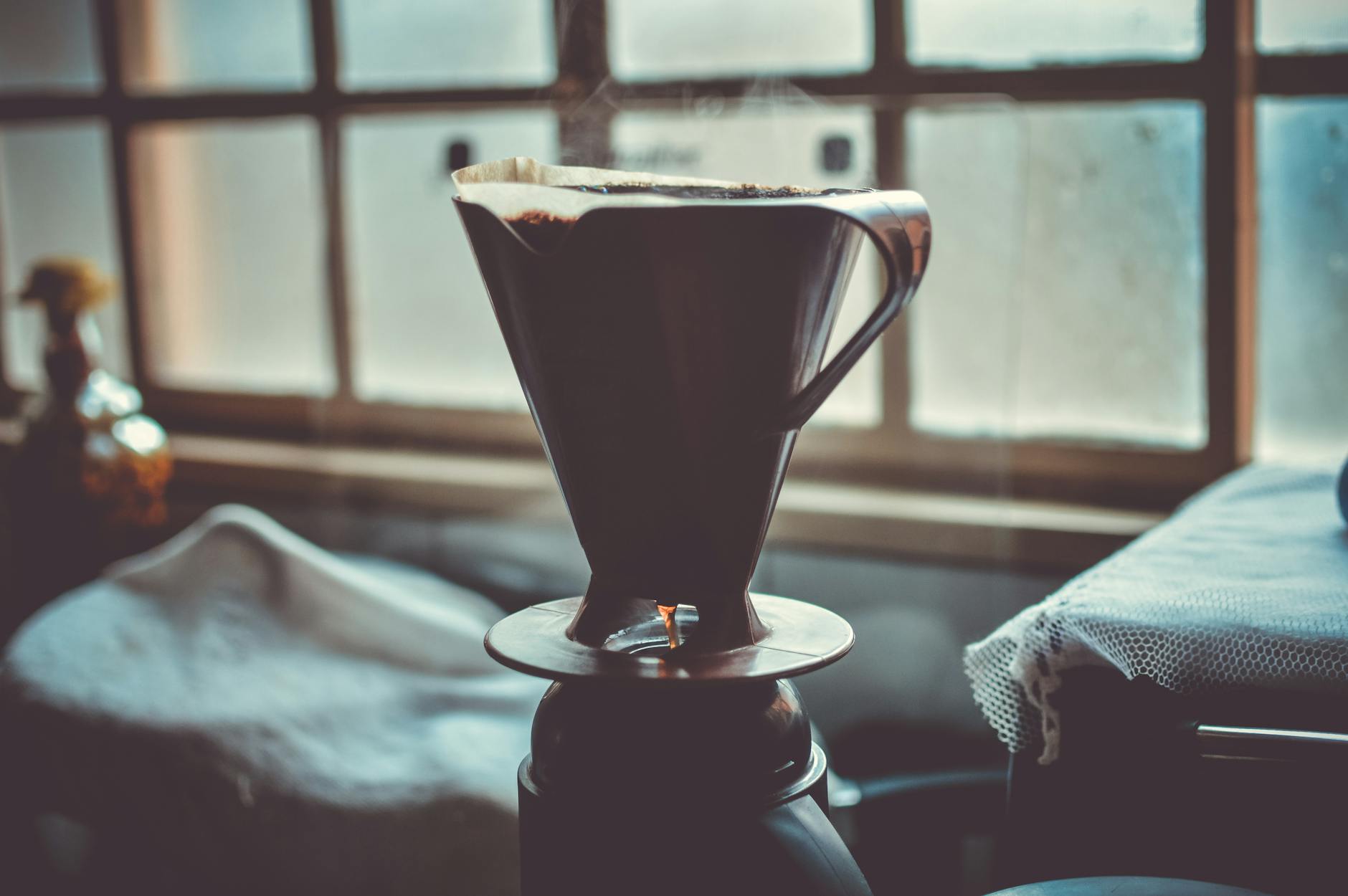
What Bentz did next was simple to the point of being almost embarrassing in retrospect. She took a brass pot, punched a small hole in the bottom, and lined it with a piece of blotting paper torn from her son's school notebook. Then she put coffee grounds on top and poured hot water through.
The paper caught the grounds. The water passed through slowly, extracting flavor without over-steeping. What dripped out the other end was clean, smooth, and — by the standards of 1908 — remarkably good.
She had just invented paper filter drip brewing. The entire principle behind every drip coffee maker in your local Target is sitting in that moment.
Bentz wasn't content to keep it to herself. She patented the design in Germany in 1908 under the name Melitta — her own first name — and began selling filter kits at a Leipzig trade fair the same year. The response was immediate. She sold out in a single day. Within a few years, she had founded the Melitta company, which still exists today as one of the world's largest coffee filter manufacturers.
The Long Road to the American Kitchen
For decades, the drip method remained largely a European preference. American coffee culture in the mid-twentieth century was dominated by percolators and, later, instant coffee — both of which prioritized speed and convenience over taste. The idea of waiting for water to slowly filter through grounds felt inefficient to a postwar American market that wanted everything faster.
That began to shift in the late 1960s and early 1970s. A designer named Vincent Marotta co-founded a company called North American Systems and set out to build an automatic drip machine that could bring Melitta-style brewing into the American home without requiring any manual effort. In 1972, the Mr. Coffee machine launched — and it changed everything.
Mr. Coffee was intuitive, affordable, and fast enough to satisfy American expectations. It automated Melitta Bentz's sixty-year-old idea and packaged it in a plastic appliance that fit neatly on a countertop. The timing was perfect. The 1970s brought growing consumer interest in fresh, quality food and drink, and drip coffee — clean, accessible, customizable — fit the moment.
Celebrity endorsements helped. Joe DiMaggio appeared in Mr. Coffee commercials throughout the 1970s, lending the machine a kind of wholesome American credibility. Sales exploded. By the end of the decade, automatic drip coffee makers had largely displaced percolators in American homes.
Why It Still Matters
Today, drip coffee makers are in roughly 40 percent of American households, and that number climbs significantly when you factor in pod-based machines that operate on the same basic principle. The specialty coffee boom — the rise of pour-over bars, single-origin beans, and precision brewing — is itself a direct descendant of the filter method Bentz pioneered. Even the most expensive manual pour-over setup at your local café is, at its core, a version of what she figured out with a punched brass pot and a scrap of notebook paper.
Melitta Bentz never became a household name in America, which is a strange kind of irony given how deeply her invention shaped the American household. But every morning, when the coffee finishes dripping and you pour your first cup, the story is right there — quiet, familiar, and completely hidden in plain sight.
That's usually how the best origin stories work.