The Religious Rebels Who Refused to Bow
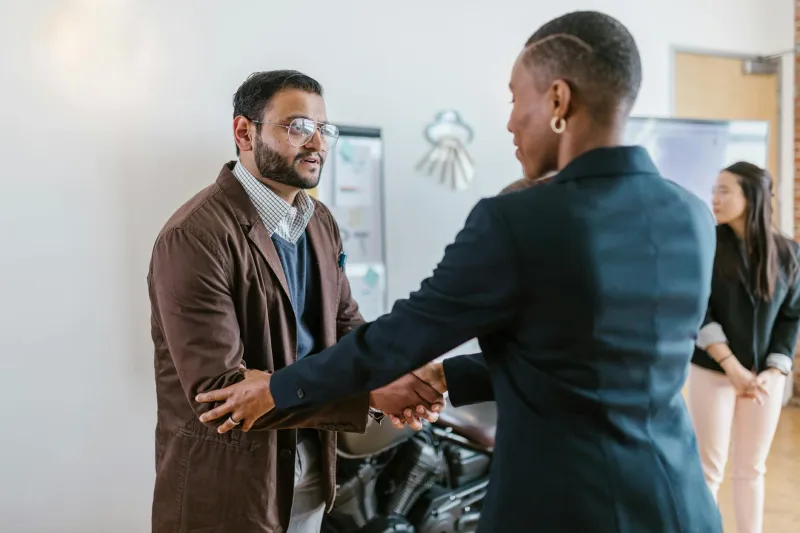
Walk into any American office today and you'll witness the same ritual millions of times over: the firm handshake. It seals deals worth billions, opens job interviews, and signals trust between strangers. But this cornerstone of American business culture started as something much more radical—a religious protest against the British class system.
In 17th-century England, the Quakers were troublemakers. These "Religious Society of Friends" members refused to remove their hats for nobility, wouldn't bow to social superiors, and insisted on treating everyone as equals. While aristocrats expected elaborate bowing ceremonies and hat-doffing rituals, Quakers developed their own greeting: a simple, direct handshake between equals.
This wasn't just politeness—it was rebellion. Every handshake declared that no human ranked above another in God's eyes. When Quakers fled religious persecution and settled in Pennsylvania, they brought this egalitarian gesture with them.
When Frontier Pragmatism Met Religious Principle
By the early 1800s, America's expanding frontier created a perfect storm for the handshake's evolution. Traditional business relied on written contracts, formal ceremonies, and elaborate legal procedures—luxuries that didn't exist in remote trading posts and frontier settlements.
Frontier merchants, many influenced by Quaker communities in Pennsylvania and Ohio, discovered that handshakes worked better than paperwork. You could seal a cattle deal on horseback, agree to grain prices in a muddy field, or settle territory disputes without lawyers or witnesses. The handshake became America's portable contract.
But the legal system hadn't caught up to frontier reality.
The Patent Dispute That Changed Everything
In 1847, Pennsylvania inventor Samuel Morrison developed a new grain harvesting mechanism and applied for a patent. The Patent Office rejected his application, claiming another inventor had submitted similar plans months earlier. Morrison disagreed—he'd made a handshake agreement with his supposed rival to share development costs and split profits.
The case seemed destined for years of expensive litigation until Morrison's lawyer made a bold argument: the handshake agreement should carry the same legal weight as a written contract. Pennsylvania's courts, heavily influenced by Quaker legal traditions, agreed.
The Morrison v. Patent Office decision established legal precedent that "agreements sealed by handshake between parties of good faith" were binding under Pennsylvania law. Other states quickly adopted similar statutes. Within two decades, the "handshake deal" had legal recognition across America.
How a Gesture Became a Business Empire
The Civil War accelerated the handshake's dominance. Military procurement officers, working at lightning speed to supply Union armies, relied on handshake agreements with manufacturers. Railroad barons sealed transcontinental deals with palm-to-palm promises. Oil wildcatters in Pennsylvania struck partnerships with firm grips and direct eye contact.
By 1900, the handshake had evolved beyond its Quaker origins into something uniquely American: a symbol of democratic commerce where anyone—regardless of background, accent, or social class—could make binding deals through personal trust.
European visitors marveled at American business culture where "a man's word and grip" carried more weight than aristocratic titles or family connections. The handshake embodied American values: equality, directness, and meritocracy.
The Digital Disruption That Almost Killed the Handshake
Fast-forward to Silicon Valley in the 1990s. Tech entrepreneurs, many barely out of college, were closing million-dollar deals via email and instant message. Physical meetings seemed antiquated. Some venture capital firms experimented with "handshake-free" investment processes, arguing that digital signatures were more efficient than in-person meetings.
The dot-com boom briefly made handshakes seem obsolete. Why shake hands when you could close deals at 3 AM via encrypted chat? Several prominent tech leaders publicly predicted the death of face-to-face business rituals.
Then came the dot-com crash of 2001.
Why the Ancient Gesture Survived the Digital Age
As digital dreams collapsed and investors lost billions on companies they'd never visited, Silicon Valley rediscovered the value of looking someone in the eye before writing checks. The handshake's comeback was swift and decisive.
Modern neuroscience explains why: physical touch releases oxytocin, creating measurable increases in trust and cooperation. The handshake's survival wasn't nostalgia—it was biology. Even in our digital age, humans need physical connection to assess trustworthiness.
The Gesture That Built America
Today's handshake carries the DNA of its Quaker origins: the belief that all people deserve equal respect and that personal character matters more than social status. Every firm grip between strangers echoes the religious rebels who refused to bow to kings and the frontier entrepreneurs who built America on mutual trust.
From Pennsylvania meeting houses to Wall Street boardrooms, the handshake remains America's most democratic gesture—a split-second declaration that in business, at least, we're all equals reaching across the divide.