The Accident That Nobody Wanted
Spencer Silver had one job in 1968: create the strongest adhesive 3M had ever produced. Instead, he accidentally invented what might have been the weakest glue in the company's history. The microspheres he created formed an adhesive so feeble that anything stuck with it could be peeled off effortlessly, leaving no residue behind.
 Photo: Spencer Silver, via www.msthalloffame.org
Most scientists would have tossed the formula and started over. Silver spent the next six years trying to convince anyone at 3M that his "failure" was actually revolutionary.
"I felt like I had a solution looking for a problem," Silver later recalled. He wandered the halls of 3M's headquarters in Saint Paul, Minnesota, giving impromptu presentations to anyone who would listen. Engineers politely declined. Marketing teams showed no interest. Even the adhesives division—his own department—couldn't figure out what to do with glue that barely stuck.
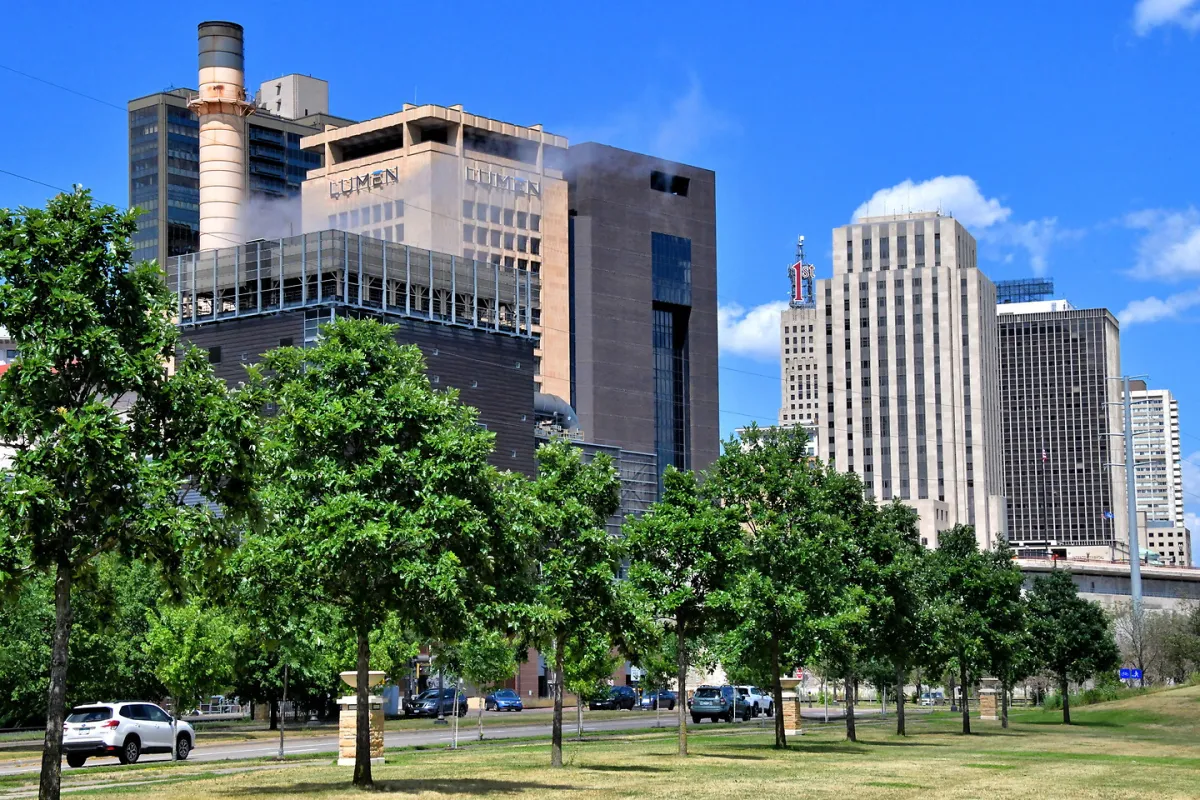 Photo: Saint Paul, Minnesota, via www.encirclephotos.com
When Frustration Breeds Innovation
Meanwhile, across the same building, Art Fry was dealing with a completely unrelated annoyance. A member of his church choir, Fry marked his hymnal pages with scraps of paper that constantly fell out during Sunday services. Every week brought the same embarrassment: bookmarks fluttering to the floor mid-song, leaving him frantically flipping through pages while the congregation sang around him.
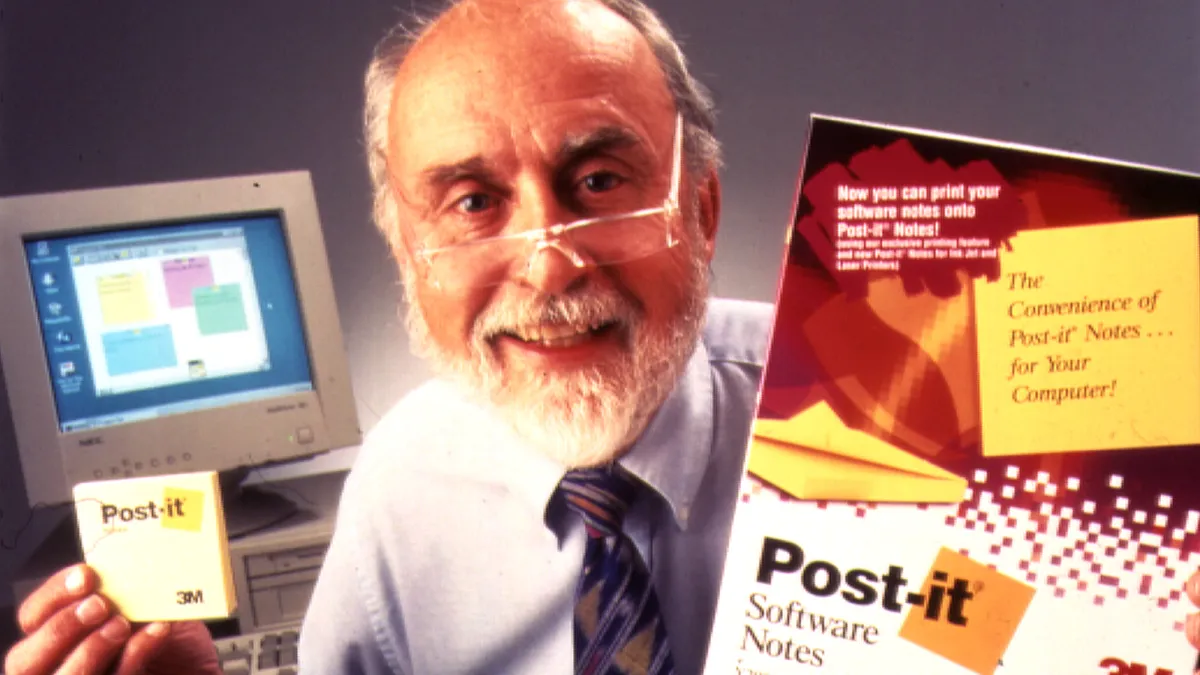 Photo: Art Fry, via www.invent.org
In 1974, six years after Silver's initial discovery, Fry attended one of Silver's presentations about his removable adhesive. The connection hit him immediately. What if that weak glue could keep his bookmarks in place without damaging his hymnal pages?
Fry requested a sample of Silver's adhesive and began experimenting in his basement workshop. He coated small pieces of paper with the formula, creating what he called "Press 'n Peel" bookmarks. They worked perfectly—sticking securely enough to stay put, yet removing cleanly without tearing pages.
Corporate Skepticism Meets Quiet Revolution
Even with a practical application, 3M's executives remained unconvinced. The company had built its reputation on permanent solutions—tape that held forever, adhesives that created unbreakable bonds. Why would anyone want something designed to come apart?
Fry didn't wait for official approval. He started making his bookmarks at work, using 3M's equipment during his lunch breaks. Soon, colleagues began asking for their own supplies. Secretaries used them for temporary notes. Engineers stuck them to documents that needed review. Word spread organically through the corporate offices.
By 1977, Fry had quietly distributed hundreds of his experimental bookmarks throughout 3M's headquarters. People weren't just using them—they were becoming dependent on them. When supplies ran low, employees would track down Fry personally, begging for more.
The Test Market That Almost Failed
Convinced by the internal enthusiasm, 3M finally agreed to test-market the product in 1977. They called them "Press 'n Peel" notes and launched them in four cities: Denver, Tulsa, Tampa, and Richmond. The results were catastrophic.
Customers didn't understand the concept. Store clerks couldn't explain why anyone would want removable adhesive. Sales were so poor that 3M nearly canceled the entire project. The company had spent nearly a decade developing a product that apparently nobody wanted to buy.
But 3M's marketing team decided to try one last approach: give the product away. In 1979, they flooded Boise, Idaho, with free samples, placing them in offices, banks, and retail stores throughout the city. They called this strategy the "Boise Blitz."
The response was immediate and overwhelming. Within days, Boise residents were calling 3M directly, demanding to know where they could buy more. Local stores couldn't keep them in stock. The free samples had created exactly what 3M needed: people who understood the product because they'd actually used it.
The Sticky Note Revolution
In 1980, 3M officially launched Post-it Notes nationwide. The name change from "Press 'n Peel" reflected a crucial marketing insight—people weren't buying removable adhesive, they were buying the ability to post temporary messages anywhere.
The timing was perfect. American offices were becoming more collaborative, with open floor plans and team-based work replacing traditional hierarchies. Post-it Notes provided a way to communicate that felt less formal than memos but more permanent than verbal messages.
By 1981, Post-it Notes had become one of 3M's top-selling products. The company that had initially dismissed Silver's weak adhesive was now selling millions of dollars worth of intentionally temporary stickiness.
The Accidental Empire
Today, Americans purchase over 50 billion Post-it Notes annually. They've become so embedded in office culture that the distinctive yellow squares appear in virtually every workplace in the country. The satisfying peel of removing a note, the slight resistance of the adhesive, the clean release—these sensations are now part of the American work experience.
Spencer Silver's "failed" experiment had become one of the most successful accidents in corporate history. His weak adhesive, dismissed for over a decade, generated billions in revenue and changed how Americans communicate at work.
Sometimes the best innovations aren't about making things stronger, faster, or more permanent. Sometimes they're about making something perfectly, temporarily, removably useful—and having the patience to wait twelve years for someone else to figure out why.