The Day Silk Disappeared
On December 7, 1941, Pearl Harbor changed everything. But while historians focus on battleships and bombers, they often miss one of the war's most unexpected casualties: American women's legs.
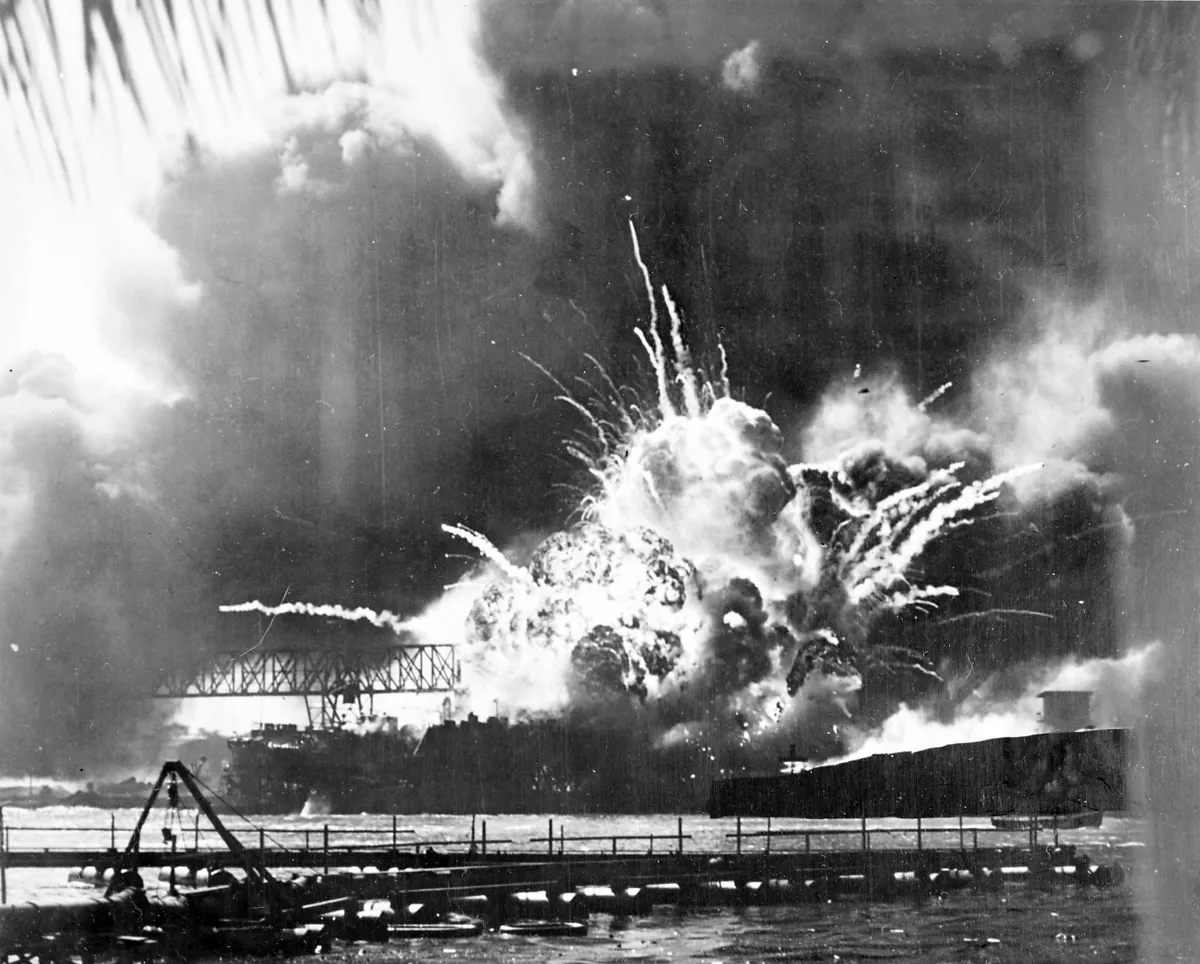 Photo: Pearl Harbor, via content.fortune.com
Within weeks of the attack, the government commandeered every strand of silk and nylon in the country. Parachutes needed silk. Military equipment demanded nylon. What had been flowing into department stores as hosiery was suddenly flowing to military depots instead.
American women, who had grown accustomed to the smooth perfection of stockings, found themselves facing bare shelves and a cultural crisis.
The Laboratory Accident That Started It All
Nylon hadn't even existed a decade earlier. In 1935, DuPont chemist Wallace Carothers was trying to create synthetic rubber when he stumbled onto something entirely different—a strong, elastic fiber that could be drawn into incredibly thin strands.
 Photo: Wallace Carothers, via alchetron.com
Carothers had no idea he'd just invented what would become the most fought-over fabric in American history. DuPont marketed it as a silk replacement, and by 1939, women were lining up at department stores to buy the first nylon stockings ever sold.
The timing couldn't have been worse—or better, depending on your perspective.
When Hosiery Became Currency
By 1943, nylon stockings had become more valuable than cash in some parts of America. Women traded cigarettes, coffee, and even meat rations for a single pair. Black markets sprouted in major cities, with stockings selling for ten times their original price.
The situation got so desperate that riots broke out. In Pittsburgh, 40,000 women stampeded a department store when rumors spread that they'd received a shipment. In New York, women camped overnight outside Macy's for a chance to buy two pairs each.
The government tried to help. They distributed "leg makeup"—essentially paint designed to simulate stockings, complete with a dark line drawn up the back of each leg to mimic the seam. Beauty parlors offered "stocking painting" services. Some women used tea bags to stain their legs brown.
None of it worked. American women wanted the real thing.
The Accidental Revolution
What nobody realized was that this wartime shortage was accidentally creating the blueprint for modern American fashion.
Before the war, stockings were practical—thick, durable, designed to last. The nylon shortage forced manufacturers to rethink everything. When production resumed in 1945, they didn't just restore the old stockings. They created something entirely new.
Post-war nylons were thinner, sheerer, more delicate. They emphasized the leg rather than simply covering it. The wartime scarcity had taught women to treasure their stockings, to see them as precious rather than practical.
This shift from utility to luxury became the foundation of the modern beauty industry.
The Psychology of Scarcity
Something fascinating happened during those stockingless years. Women who had never thought twice about hosiery became obsessed with it. The shortage created desire where none had existed before.
Psychologists now recognize this as the scarcity principle—we want most what we can't have. But in 1943, nobody understood why American women were willing to fight each other over something their grandmothers had lived without.
The war accidentally taught an entire generation that stockings weren't just clothing—they were symbols of femininity, sophistication, and social status.
When the Soldiers Came Home
VJ Day brought more than peace—it brought nylon back to American stores. DuPont had spent four years perfecting their manufacturing process for military applications. When they turned those innovations back to civilian use, they could produce better stockings cheaper and faster than ever before.
The result was explosive. In the first year after the war, Americans bought 1.3 billion pairs of nylon stockings. Department stores couldn't keep them in stock. The product that had started as a silk substitute became the foundation of a multi-billion-dollar industry.
The Unintended Legacy
Today, when we think about the forces that shaped modern American fashion, we think about designers, celebrities, and cultural movements. We rarely consider the role of wartime rationing.
But the nylon shortage of World War II did something that no marketing campaign could have achieved—it convinced an entire generation of American women that stockings were essential to their identity.
That psychology outlasted the war by decades. Even as casual dress codes emerged in the 1960s and 70s, professional women continued wearing stockings because the war had taught their mothers that bare legs weren't respectable.
The Thread That Connected Everything
The story of nylon stockings reveals something profound about American culture—how quickly the extraordinary becomes ordinary, and how scarcity can transform a laboratory curiosity into a cultural obsession.
Wallace Carothers died in 1937, two years before the first nylon stockings went on sale. He never saw the riots, the black markets, or the cultural revolution his accidental discovery would create.
But every time an American woman slides on a pair of pantyhose, she's participating in a ritual that began with a wartime shortage, a desperate search for silk alternatives, and the unintended consequences of a world at war.
Sometimes the most powerful forces in culture aren't planned—they're just what happens when ordinary people adapt to extraordinary circumstances.