A Marble, a Mess, and the Little Pen That Conquered the World
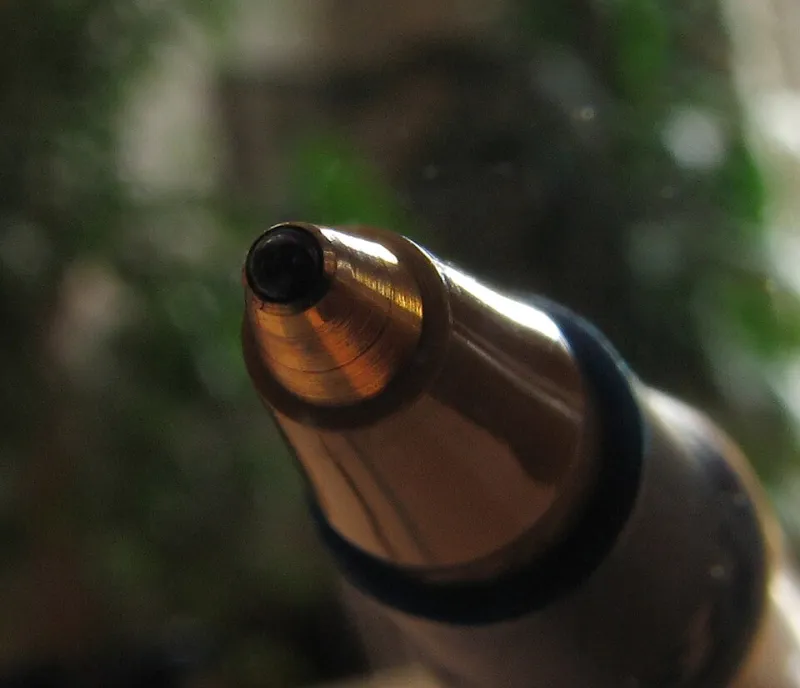
Photo: The original uploader was H at English Wikipedia., CC BY 2.5, via Wikimedia Commons
You've probably chewed on one. Lost about forty of them this year. Clicked the end of one anxiously through an entire Zoom meeting without writing a single word. The ballpoint pen is so ordinary, so unremarkable, that most people couldn't tell you who invented it — or why it was considered one of the most significant technological breakthroughs of the 20th century when it first hit the market.
But behind that humble plastic tube is a story involving a frustrated journalist, a schoolyard full of kids playing marbles, and a race to equip Allied soldiers with a pen that wouldn't leak at 30,000 feet.
The Problem With Being a Journalist in 1930s Budapest
László Bíró had ink on his hands. Literally and often. As a journalist working in Hungary during the 1930s, he spent his days writing — and spending just as much time mopping up the damage left behind by his fountain pen. Fountain pens were the standard writing instrument of the era, but they were notoriously temperamental. The ink was thin and slow to dry, which meant smeared pages, blotted manuscripts, and the constant indignity of pressing your palm into wet words you'd just written.
Bíró was also a proofreader at a printing press, which gave him a useful observation: the ink used in newspaper printing dried almost instantly and didn't smear. It was thick, paste-like, and completely different from fountain pen ink. The obvious question was why no one had figured out how to put that kind of ink into a pen.
The not-so-obvious answer was that thick ink doesn't flow through a traditional pen nib. It just sits there, refusing to move. Bíró knew there had to be a mechanical solution — he just hadn't found it yet.
The Schoolyard Moment Nobody Planned
The breakthrough came, as so many great ones do, while he was paying attention to something completely unrelated.
Watching children play marbles in the street one afternoon, Bíró noticed something: when a marble rolled through a puddle, it left a clean, even trail of water behind it. The sphere was picking up liquid and depositing it in a perfectly controlled line. It was doing, in miniature, exactly what a pen tip needed to do.
Bíró went home and started sketching. Together with his brother György, a chemist, he began developing a pen with a tiny rotating metal ball at its tip — small enough to sit in a socket, free to roll, and capable of drawing thick ink from a reservoir as it moved across paper. The ball controlled the flow. The ink dried almost instantly. No smearing, no leaking, no ruined shirts.
They filed their first patent in Hungary in 1938. Then the war changed everything.
How World War II Launched a Pen
Bíró was Jewish, and as Nazi influence spread across Europe, he and his brother fled — first to Paris, then to Argentina, where they filed a new patent in 1943. But the pen's real launch came from an unlikely customer: the British Royal Air Force.
Allied pilots had a specific problem. At high altitudes, the air pressure changes caused fountain pens to leak, flooding cockpits with ink and rendering logbooks unreadable. The RAF needed a pen that worked reliably at altitude. Bíró's design did exactly that. The British government licensed the technology and began supplying ballpoint pens to aircrew. American GIs encountered them overseas and came home raving about them.
In 1945, a Chicago businessman named Milton Reynolds rushed a reverse-engineered version to market in the United States, selling the pens at Gimbels department store in New York for $12.50 each — nearly $200 in today's money. They sold out in a single day. The ballpoint pen had arrived in America, and it arrived as a luxury item.
From Status Symbol to Junk Drawer Staple
For the next decade, manufacturers raced to drive the price down while improving reliability. By the late 1950s, the French company Bic had cracked the formula: a simple, disposable pen that cost almost nothing to produce and wrote consistently every time. Their Cristal pen, introduced in 1950, is still in production today and is considered one of the best-selling products in human history. Somewhere in the world, roughly 57 Bic Cristals are sold every second.
What's remarkable is how little the core design has changed. The rotating ball tip, the viscous ink, the simple reservoir — it's all essentially what Bíró sketched out in Budapest after watching kids play in the street. Manufacturers have refined materials, improved consistency, and added ergonomic grips, but the fundamental engineering is the same. In a world where technology becomes obsolete within years, the ballpoint pen has gone nearly eight decades without a meaningful redesign.
Why It's Still Basically Perfect
Engineers have a term for this: a mature technology. It means a design that has been so thoroughly optimized for its purpose that there's simply nothing left to improve in any meaningful way. The ballpoint pen reached that point a long time ago.
It works in zero gravity (NASA famously tested it). It works upside down. It works in extreme cold. It costs almost nothing. It requires no power source, no connectivity, no software update. In an era when we've complicated nearly every other daily task, the ballpoint pen remains defiantly, gloriously simple.
László Bíró died in 1985 in Buenos Aires, having never become particularly wealthy from his invention — most of the commercial profits went to others who licensed or copied his design. But his birthday, September 29th, is celebrated in Argentina as National Inventors' Day. Not a bad legacy for a man who just wanted to stop getting ink on his hands.
Next time you click one absently during a meeting, maybe give it a second thought. That little rolling ball has been doing its job since before your parents were born — and it's not planning to stop anytime soon.