How Fighter Pilot Gear Became the Most Copied Sunglasses Shape in History
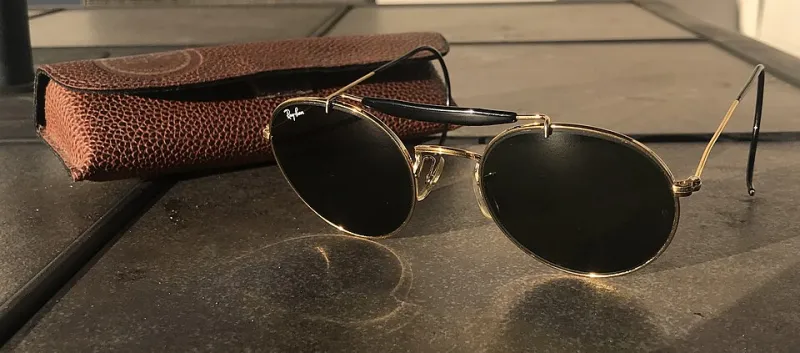
Photo: Tyrol5, CC BY-SA 4.0, via Wikimedia Commons
You've seen the shape ten thousand times. Teardrop lenses, thin metal frame, a slight downward curve at the outer edge. They're on gas station display racks for $12 and in designer boutiques for $400. They show up on athletes, actors, politicians, and your neighbor mowing his lawn on a Saturday. Aviator sunglasses are so ubiquitous that it's almost impossible to remember they were once purely functional equipment — military-issue gear designed to solve a very specific problem at 30,000 feet.
The story of how they got from there to here is messier and more interesting than the clean mythology of "cool" usually allows.
The Problem With High Altitude
In the early days of military aviation, pilots flying open cockpits at high altitude faced a genuinely dangerous condition: intense UV exposure combined with glare from cloud cover and reflective surfaces below. Standard eyewear of the era — small, round frames with tinted lenses — didn't cover enough of the eye's field of vision to protect against the wide-angle glare pilots experienced.
In the late 1920s, the U.S. Army Air Corps partnered with the optical company Bausch & Lomb to develop a purpose-built solution. The result, refined through the early 1930s, was a large teardrop-shaped lens that covered the entire visual field, mounted on a lightweight gold-tone metal frame with thin temples. The lenses were tinted green to filter UV without distorting color perception — critical when a pilot needed to read instruments accurately.
 Photo: Bausch & Lomb, via optixworld.com.my
They were called Anti-Glare goggles, and later simply Aviator glasses. They were issued equipment, not consumer products. Nobody was buying them at a store.
The Surplus Problem Nobody Planned For
World War II changed the scale of everything. The U.S. military issued aviator-style sunglasses to hundreds of thousands of personnel — not just pilots, but officers across multiple branches who wanted the practical benefits. By the time the war ended in 1945, the government was sitting on an enormous stockpile of surplus military gear, including millions of pairs of sunglasses.
This was a common postwar headache. Jeeps, boots, jackets, mess kits — the government had overproduced for a conflict that ended faster than the supply chain expected, and now needed to move inventory. Some surplus went to foreign allies. Some was sold through military surplus stores that became a fixture of postwar American towns. And some was aggressively remarketed to civilian consumers.
Bausch & Lomb, which held the manufacturing contracts, saw an opportunity. They introduced the aviator frame to the civilian market under the brand name Ray-Ban — a name coined to emphasize the lens technology rather than the military origin. The product was real. The engineering was genuine. But the marketing pivot was deliberate: they weren't selling surplus military equipment. They were selling the idea of flying.
The Photograph That Did More Than Any Ad
Marketing can only do so much. What truly launched aviator sunglasses into the American cultural imagination was a single photograph taken in October 1944.
General Douglas MacArthur, fulfilling his famous promise to return to the Philippines, waded ashore at Leyte Gulf in front of a crowd of press photographers. He was wearing his signature crushed officer's cap, his military uniform — and a pair of aviator sunglasses. The image ran on the front page of newspapers across the country. It became one of the most reproduced photographs of the war.
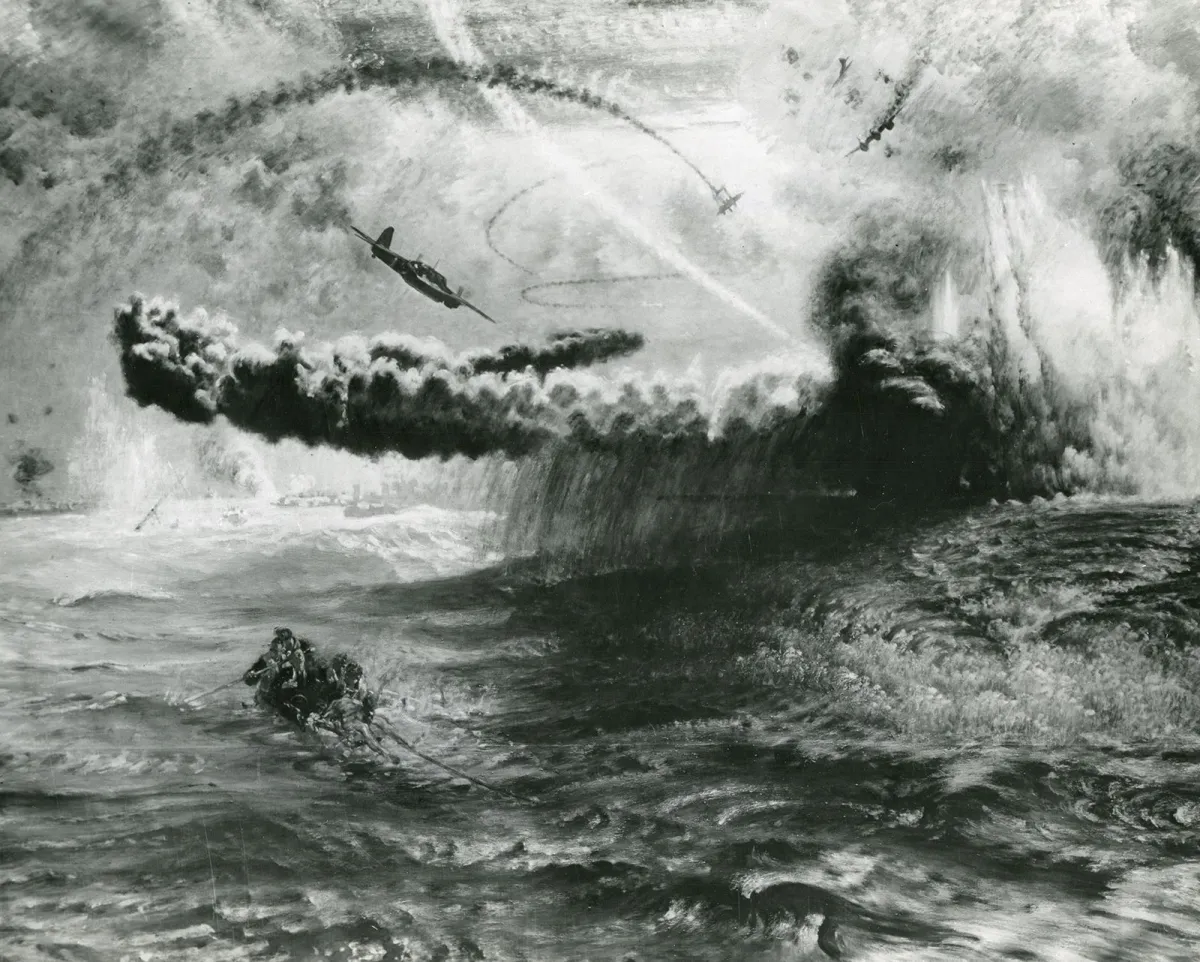 Photo: Leyte Gulf, via cdn.britannica.com
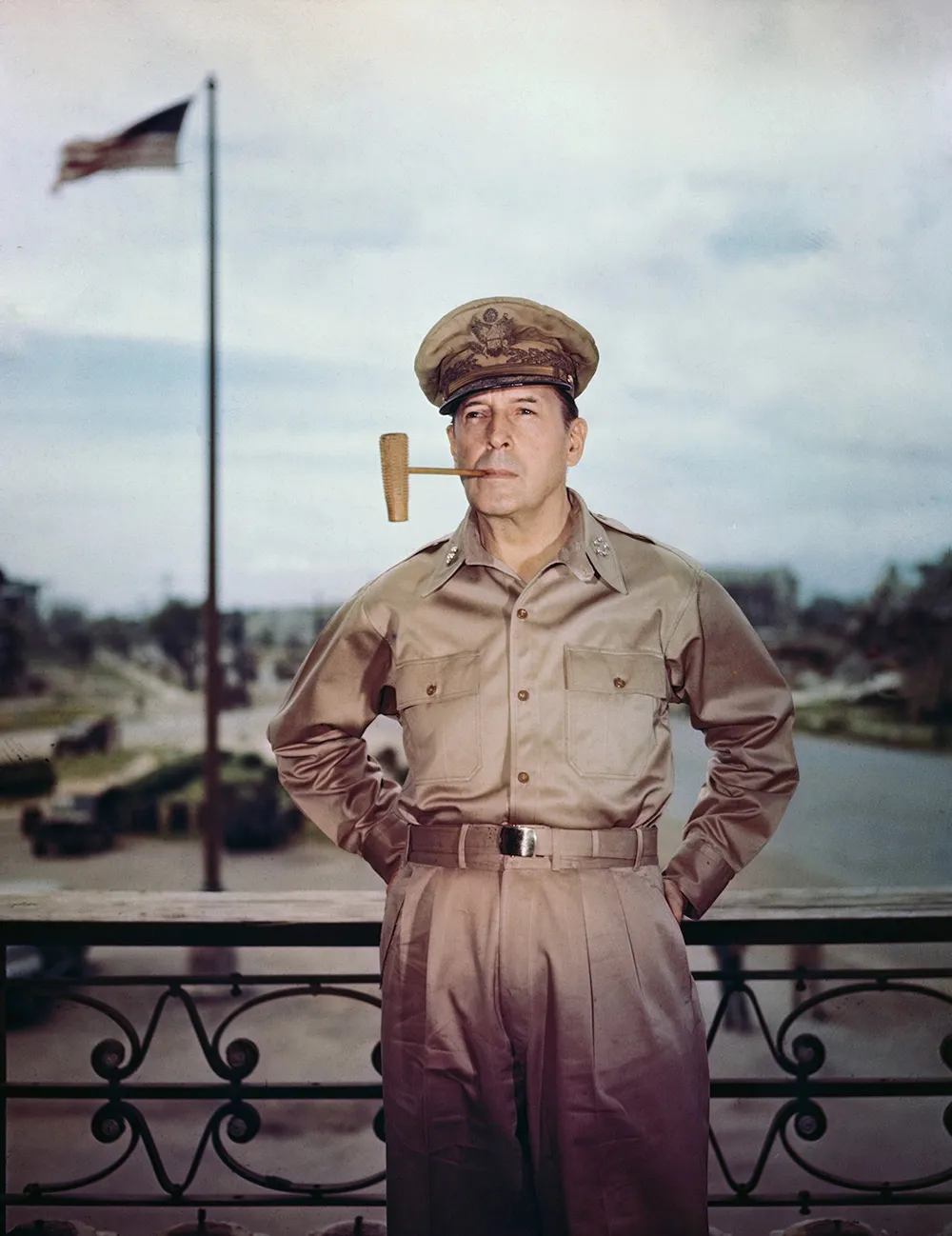 Photo: General Douglas MacArthur, via think.iafor.org
MacArthur understood image. He had chosen every element of his appearance deliberately. And the sunglasses — which he wore consistently throughout the Pacific campaign — became inseparable from his persona: commanding, distant, slightly theatrical. Whether you admired or resented MacArthur, those glasses looked like authority.
Celebrity culture and military hero worship ran together in postwar America in ways that are hard to overstate. When men who'd seen MacArthur's photograph walked into a surplus store and saw those same frames on a peg, the connection was immediate.
Hollywood Finishes the Job
What the military started and surplus stores spread, Hollywood cemented. Through the 1950s and into the 1960s, aviator frames appeared on actors playing tough, competent, slightly dangerous men — the archetype postwar American audiences couldn't get enough of. The glasses carried a shorthand: this person has been somewhere, done something, operates outside normal civilian constraints.
By the time Peter Fonda wore them in Easy Rider (1969) and then Tom Cruise made them synonymous with Top Gun (1986), the military origin had been almost entirely absorbed into pure style mythology. Each generation rediscovers the shape and claims it as its own — not knowing they're reaching back to a 1930s Army Air Corps engineering specification.
Why the Shape Won't Go Away
Fashion cycles are relentless, but aviators keep returning because the shape actually works. The teardrop lens covers more of the eye than almost any other frame style. The thin metal construction ages well and repairs easily. And there's a proportion to the design — the way the frame sits on the face — that flatters a wide range of facial structures.
Bausch & Lomb's engineers weren't trying to be stylish. They were solving a practical problem with the constraints of available materials. That kind of problem-solving tends to produce durable solutions.
The next time you slide on a pair of aviators before a drive, you're wearing the direct descendant of gear that was designed to keep a pilot alive above the Pacific. It just turns out that functional and iconic are, sometimes, the exact same thing.