How a Chemist Sold America a Problem It Didn't Know It Had — Then Sold the Solution
How a Chemist Sold America a Problem It Didn't Know It Had — Then Sold the Solution
Ask anyone when they brush their teeth and they'll say morning and night, almost reflexively. It feels like basic hygiene — something your parents taught you, something your dentist reminds you about, something that's simply part of being a clean and responsible adult. It feels ancient, obvious, and non-negotiable.
It is none of those things.
For most of American history, brushing your teeth was a rare and loosely defined habit. Many people did it occasionally, with whatever happened to be available — chalk, charcoal, salt, or a damp rag. The idea that you should do it twice a day, every single day, with a specific commercial product? That was invented. Deliberately. By one man who understood human psychology well enough to rewire an entire nation's daily routine.
Before the Tube, There Was the Pot
Toothpaste, in some form, has existed for thousands of years. Ancient Egyptians used a paste made from crushed rock salt and mint. Romans favored powdered bone and oyster shell. By the 1800s, American pharmacists were selling tooth powders and pastes in small ceramic pots, usually containing chalk, soap, and some flavoring to make the experience less unpleasant.
But here's the thing: almost nobody was buying them regularly. Oral hygiene was understood as a concept, but it wasn't a habit. Surveys conducted in the early twentieth century found that the vast majority of Americans rarely cleaned their teeth at all. The military discovered this problem firsthand during World War I, when dental exams revealed that tooth decay was so widespread among recruits that it was being classified as a national health issue. Army officials were alarmed. The general public, for the most part, wasn't particularly bothered.
That gap — between a real problem and public indifference — is exactly where Claude Hopkins saw an opportunity.
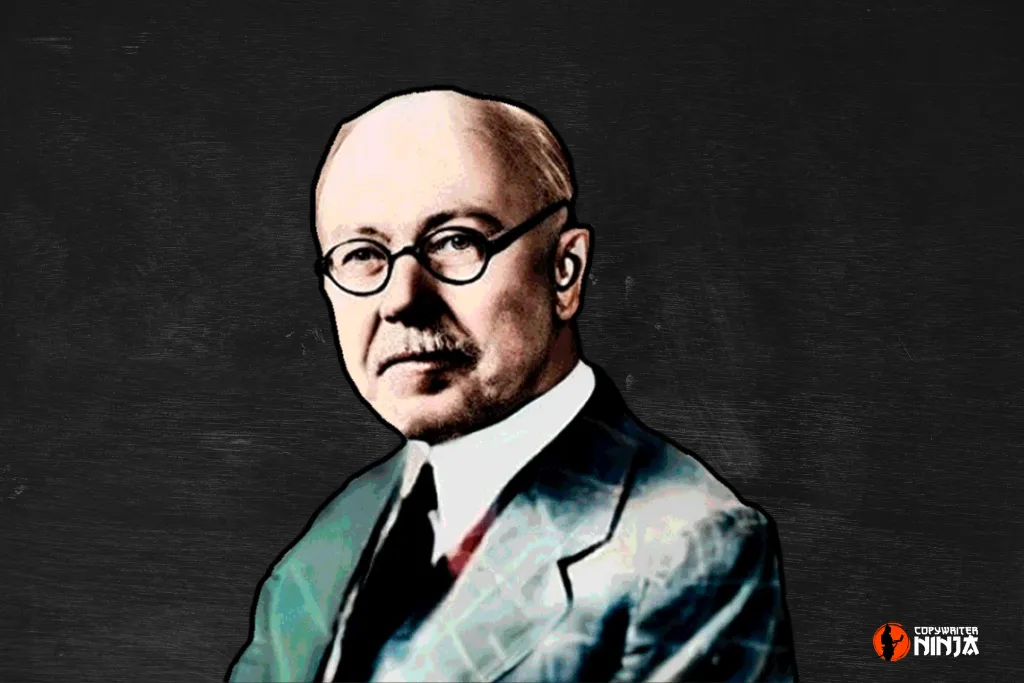 Photo: Claude Hopkins, via andrewsilva.com.br
The Man Who Manufactured Urgency
Claude Hopkins was one of the most influential advertising minds of the early twentieth century, though his name rarely comes up outside of marketing history circles. He worked for the Lord & Thomas advertising agency in Chicago and had a particular gift for identifying what he called "reason why" advertising — campaigns built not on vague emotional appeals but on specific, tangible claims that made consumers feel they were making rational decisions.
In 1915, Hopkins was hired to promote a new toothpaste called Pepsodent. It was a fine product — minty, foamy, and pleasantly tingly — but the market for toothpaste was small and the competition, such as it was, wasn't particularly fierce. The real obstacle wasn't other toothpaste brands. It was the fact that most Americans simply didn't think about their teeth until they hurt.
Hopkins needed to create a reason to think about them every single day.
He found his hook in an unusual place. While researching dental literature, he came across references to what dentists called the "pellicle" — a thin film that naturally forms on teeth throughout the day. Hopkins recognized immediately that this was his vehicle. He didn't need to explain the science accurately. He just needed to give people something they could feel with their tongue, name it something vaguely threatening, and position Pepsodent as the solution.
His ads described this film as a dingy coating that dulled your smile and invited decay. They asked readers to run their tongue across their teeth and feel it for themselves. They promised that Pepsodent would remove it, leaving teeth "film-free" and bright. The campaign ran in newspapers across the country starting in 1917.
The Habit Loop Before Anyone Called It That
What Hopkins had constructed, without using the terminology, was what behavioral scientists would later call a habit loop: a cue, a routine, and a reward. The cue was the feeling of film on your teeth — something you could notice any time, but especially in the morning and before bed. The routine was brushing with Pepsodent. The reward was the cool, tingling sensation the product left behind, which Hopkins had made sure to engineer into the formula specifically because it gave people a physical signal that something had happened.
Within three years of the campaign launching, Pepsodent was one of the best-selling products in the country. Within a decade, surveys showed that the percentage of Americans who brushed regularly had climbed from single digits to over 65 percent. The military, which had been struggling to address dental health in its ranks, adopted Pepsodent and made tooth brushing part of the daily regimen for soldiers — a habit those men then carried home after the war.
The twice-daily ritual wasn't a health recommendation that gradually achieved cultural adoption. It was a marketing strategy that worked so well it became invisible.
Why the Story Matters Beyond the Bathroom
Pepsodent's success is studied in business schools and behavioral psychology programs not because of what it did for teeth, but because of what it demonstrated about habit formation. Charles Duhigg devoted a significant section of his 2012 book The Power of Habit to the Pepsodent story, using it to explain how entirely new behaviors can be installed into daily life if you engineer the right cue and reward.
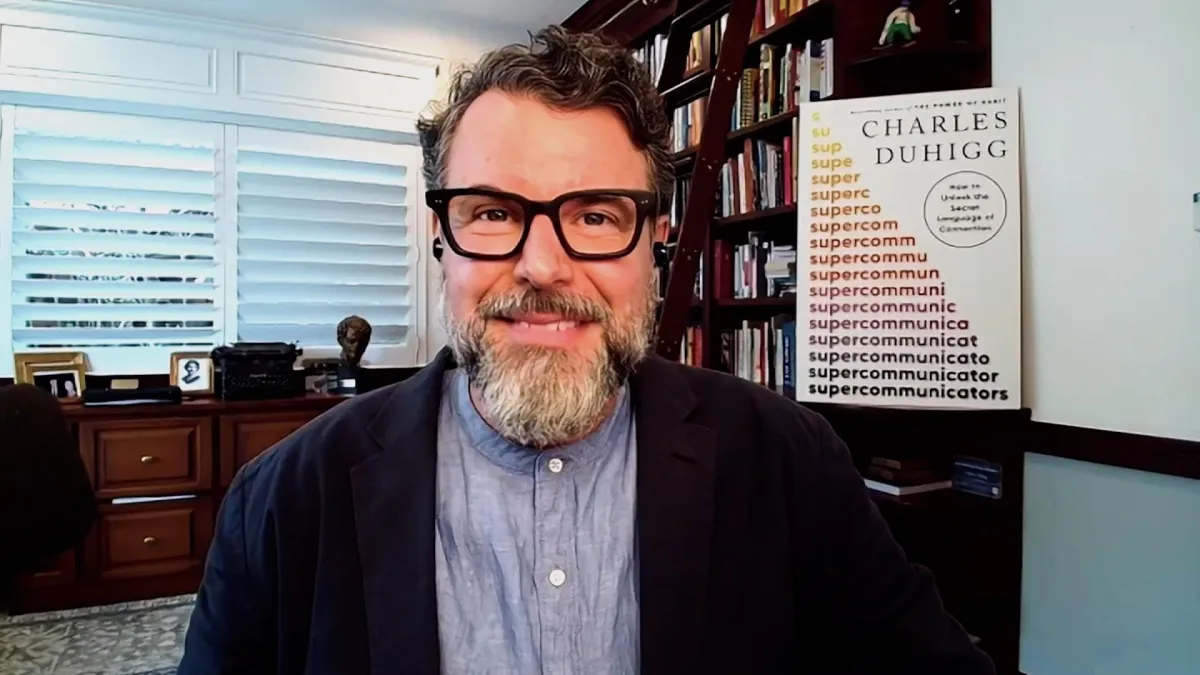 Photo: Charles Duhigg, via www.pbs.org
The toothpaste industry today is worth over $7 billion annually in the United States alone. Americans spend more on oral care products than almost any other nation on earth. And almost all of it — the whitening strips, the electric toothbrushes, the charcoal pastes, the water flossers — exists downstream from the moment a Chicago ad man decided to make people feel incomplete without a minty tingle.
You brush your teeth because it's healthy. But you do it twice a day, every day, without fail, because someone in 1917 figured out exactly how to make you feel like you had no other choice.