The Spinning Stripes Outside Your Barber Shop Have a Grim Story to Tell
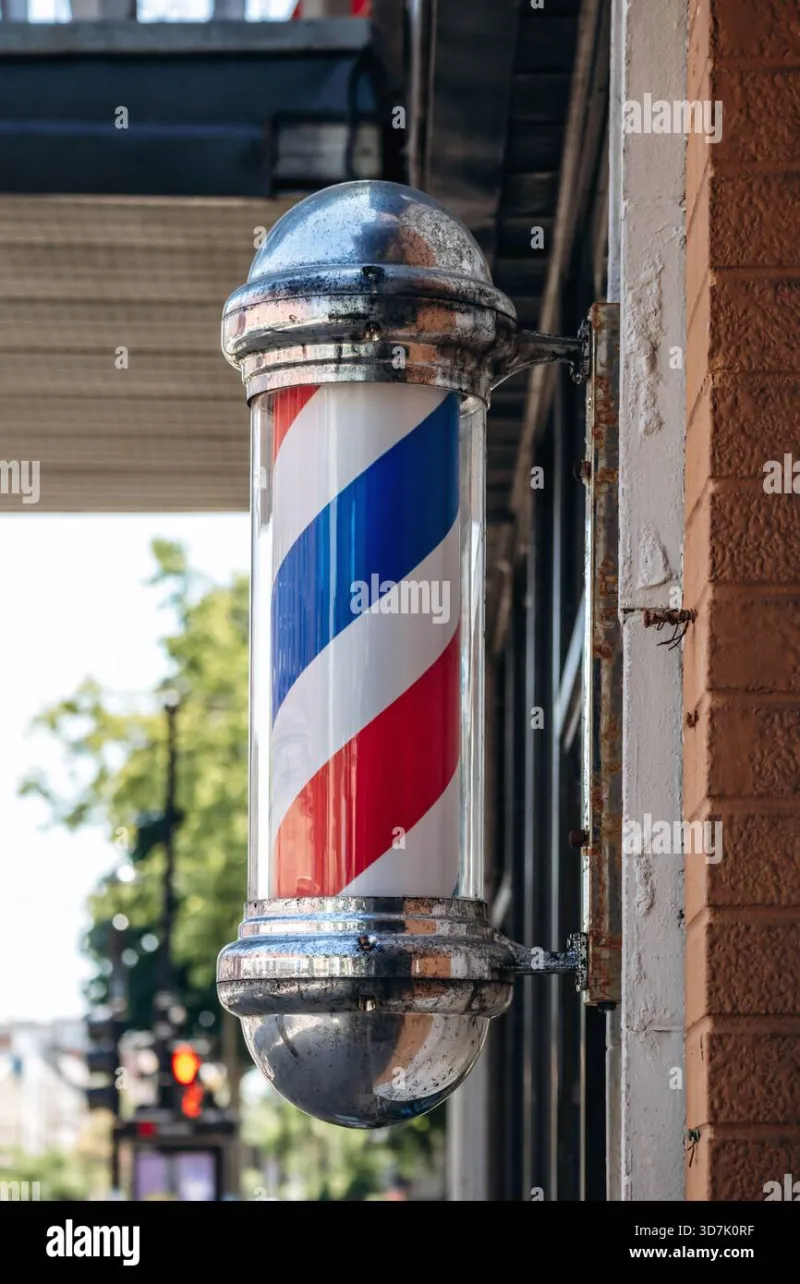
Photo: barber pole spinning red white blue stripes barbershop exterior, via c8.alamy.com
There's something almost hypnotic about a barber pole. That slow, endless spiral of red, white, and blue, rotating in place outside shops from small-town Main Streets to urban strip malls, is one of the most recognizable commercial symbols in America. It's cheerful, retro, and vaguely reassuring — a sign that inside, someone will tidy you up and send you back into the world looking sharper than when you arrived.
What it doesn't advertise, but probably should, is what those stripes originally represented. Because the barber pole is not a design choice. It's a historical record. And what it's recording is several centuries of surgery performed without anesthesia in the back of what was essentially a hair salon.
When Barbers Were Also Your Surgeon
To understand the barber pole, you have to go back to medieval Europe — specifically to the monasteries of the 11th and 12th centuries. Catholic clergy at the time were required by church doctrine to maintain a clean-shaven appearance, which meant monks needed regular barbering. Monasteries kept barbers on staff, and those barbers became unusually skilled with blades.
In 1163, Pope Alexander III issued a decree forbidding clergy from performing surgery or drawing blood — it was considered beneath their spiritual dignity. The monks who had been practicing rudimentary medicine, including a popular procedure called bloodletting, suddenly needed someone else to take over. The barbers, already trusted with sharp instruments and already present in the community, stepped in.
And so began one of history's stranger professional overlaps: the barber-surgeon.
Bloodletting Was Medieval Medicine's Answer to Everything
To modern ears, bloodletting sounds like pure quackery, and by contemporary medical standards, it largely was. But for centuries, it was considered legitimate treatment for an enormous range of conditions — fever, inflammation, plague, mental illness, and a long list of ailments that medieval physicians attributed to an imbalance of the body's "humors." The theory held that draining blood from the body could restore balance and promote healing.
Barber-surgeons performed bloodletting using two main methods: cutting a vein directly with a lancet, or applying leeches to the skin. They also pulled teeth, set fractures, treated wounds, and performed amputations when necessary. These were not gentle procedures, and they were performed in the same chair where you'd also get a shave.
The tools and materials involved in bloodletting are exactly what the barber pole commemorates, though most people walking past one have no idea.
The Pole Decoded
Here's what those stripes actually mean.
When a barber-surgeon performed a bloodletting procedure, the patient was given a pole to grip tightly. Squeezing the pole caused the veins in the arm to dilate, making them easier to access. After the procedure, the bandages used to dress the wound were washed and hung on that same pole to dry. As they dried in the open air, they would twist and spiral around the pole in the breeze, creating a pattern of red and white — blood and bandage.
Over time, barbers began displaying a pole outside their shops as a signal of their services, eventually painting the spiral pattern permanently onto the pole so passersby would know what was on offer. The bowl often depicted at the top or bottom of a barber pole — a detail many modern versions still include — represented the brass basin used to collect blood during the procedure, or alternately the bowl used to hold the leeches.
The white stripe represents the bandages. The red represents the blood. In the United States, blue was added — most likely as a patriotic flourish, though some historians argue it represents the blue of veins before blood is oxygenated. Either way, the American version of the pole carries a color that its European predecessors didn't typically include.
The Great Professional Divorce
Barber-surgeons held their unusual dual role for several centuries, operating across Europe and eventually in the American colonies. But the medical establishment was growing increasingly uncomfortable with the arrangement. In 1745, the British Parliament formally separated the professions, establishing the Company of Surgeons as distinct from the Company of Barber-Surgeons. Surgery was to be a learned profession; barbering was a trade.
America followed a similar path as formal medical licensing developed through the 18th and 19th centuries. By the time the United States was establishing its own medical institutions, the idea of a barber performing surgery was already archaic. The two professions went their separate ways — but the barber kept the pole.
A Symbol That Outlived Its Meaning
By the 20th century, almost nobody entering a barber shop knew what the pole outside actually meant. It had been stripped of its original context and repurposed as pure branding — a cheerful, distinctive marker that said "haircuts here" without any reference to the blood and bandages that had inspired its design.
In 1950, the United States even passed the Barber Pole Law, which restricted the display of barber poles to licensed barber shops — an acknowledgment of how strongly the symbol had become associated with the profession, even as its origins faded from public memory.
Today, the barber pole is experiencing something of a cultural revival alongside the resurgence of traditional barbering as a craft. New shops with vintage aesthetics are embracing the pole as a retro emblem of authenticity. The spinning, illuminated versions that line American streets are often considered charming, nostalgic, even artisanal.
None of which changes what those stripes are actually about.
The next time you settle into a barber's chair, consider the pole spinning slowly outside the window. It's one of the few commercial symbols in everyday American life that has remained essentially unchanged for centuries — a small, colorful artifact of a time when the man trimming your hair might also, if things went sideways, have been the person draining your blood.
The haircut, at least, has improved considerably.