The Kitchen Disaster That Became America's Favorite Bake Sale Item: Tracing the True Origin of the Brownie
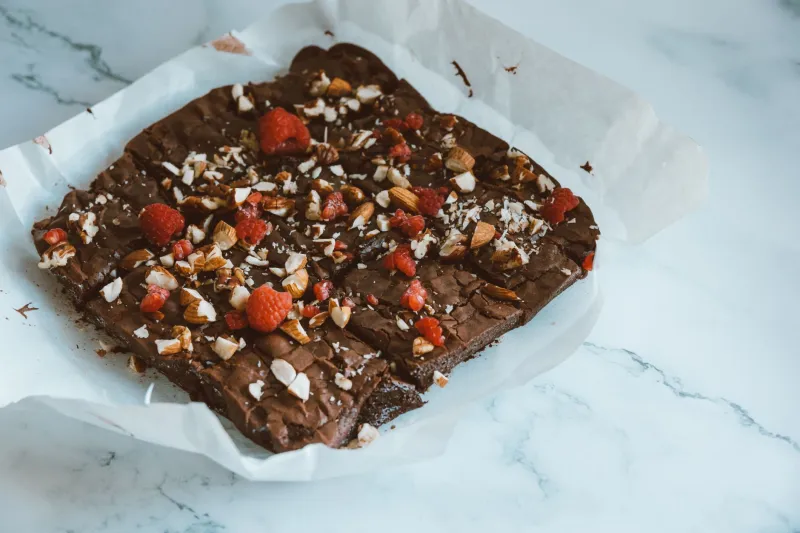
There are few things more American than a brownie. Dense, chocolatey, somewhere between a cake and a candy bar in texture — it occupies its own entirely distinct category in the dessert universe. You'll find them at church fundraisers, school bake sales, holiday cookie exchanges, and every gas station between here and the state line. They are, in the most genuine sense, part of the fabric of American food culture.
And yet, ask anyone where they came from, and you'll get a blank stare.
The origin of the brownie is one of those food history questions that seems like it should have a clean answer but absolutely does not. There are multiple competing claims, at least two cities that want credit, and a cast of characters ranging from a Chicago socialite to a Boston housewife to a Maine innkeeper. Sorting through the mythology to find the most credible account requires a little patience — but the story that emerges is worth the trouble.
The Claims on the Table
Let's start with what the competing origin stories actually are, because understanding the confusion is part of understanding the brownie itself.
The most frequently cited claim involves the Palmer House Hotel in Chicago. The story goes that Bertha Palmer, a prominent socialite and wife of the hotel's owner, requested a dessert for the 1893 World's Columbian Exposition — something portable that ladies could eat at the fairgrounds without the fuss of pie or layer cake. The hotel's kitchen produced a chocolate square with a glazed walnut top, and the Palmer House has been serving a version of that recipe ever since. It's a good story, well-documented, and the recipe is genuinely old.
But here's the problem: the Palmer House creation, while delicious, is not quite what most Americans mean when they say "brownie." It's richer, denser, and more confection than baked good. It doesn't have the chewy, slightly cakey texture that defines the brownie as most people know it.
The second major claim comes from Bangor, Maine, where a local legend holds that a housewife accidentally left the baking powder out of a chocolate cake batter around the turn of the century. The flat, fudgy result was served anyway, and the brownie was born. It's a charming story. It's also almost entirely undocumented.
Which brings us to Boston.
The Fannie Farmer Connection
The most credible origin of the modern American brownie runs through Boston in the late 1890s, and specifically through the world of domestic science — the then-revolutionary idea that cooking could be taught systematically, like any other discipline.
Fannie Merritt Farmer was the director of the Boston Cooking School and the author of what became one of the most influential cookbooks in American history. Her 1896 Boston Cooking-School Cook Book was the first major American cookbook to use standardized measurements — actual cups and teaspoons rather than "a handful" or "enough" — and it transformed how ordinary Americans approached cooking.
The first printed brownie recipe to closely resemble the modern version appeared in the 1906 edition of Farmer's cookbook. But food historians trace the actual creation to a few years earlier, to the kitchen experiments of home bakers in the Boston area who were working with the new, widely available cocoa and chocolate products that had entered the American market in the 1890s.
The most plausible specific account involves a home cook — the exact identity is disputed, but the setting is consistently placed in the Boston area — who was making a chocolate cake and either ran short of flour, forgot a leavening agent, or simply over-mixed the batter. The result didn't rise the way a cake should. It came out flat and dense. But it tasted extraordinary, and rather than throw it out, she cut it into squares and served it.
The recipe spread the way recipes always spread before the internet: person to person, handwritten on index cards, passed between neighbors and church groups and women's clubs. By the time Farmer codified a version in print, the brownie was already circulating widely through New England kitchens.
Why the Timing Mattered
The brownie didn't just emerge from a single kitchen accident. It emerged at a specific moment when American baking culture was ready for it — and that context is what made it stick.
The 1890s saw the mass commercialization of chocolate in the United States. Baker's Chocolate had been around since the 18th century, but it was primarily used for drinking. The development of cocoa powder and eating chocolate in forms accessible to home bakers was relatively new, and American cooks were actively experimenting with it. There was a cultural appetite — literally — for new chocolate-based recipes.
At the same time, the domestic science movement was encouraging women to approach cooking with creativity and precision. Mistakes weren't necessarily failures; they were data. The idea that a kitchen accident could be evaluated, refined, and turned into something intentional was very much in the spirit of the era.
The brownie was the perfect product of that moment: a forgiving recipe that rewarded improvisation, used newly available ingredients, and produced something that tasted like it required far more skill than it actually did.
What the Brownie Actually Tells Us
Food historians love the brownie origin story because it illustrates something important about how American cuisine actually developed. It wasn't chefs in fancy restaurants or food scientists in laboratories who shaped what Americans eat every day. It was home cooks — mostly women, mostly working without recognition — who experimented in their own kitchens and shared what worked with the people around them.
The brownie has no single inventor because it didn't need one. It was a collective discovery, refined by hundreds of hands before anyone thought to write it down. The Fannie Farmer version gave it a standardized form, the Palmer House gave it a glamorous backstory, and the Maine legend gave it a good accident narrative. But the real origin is more democratic than any of those stories: it happened in ordinary kitchens, made by ordinary people, and it spread because it was simply too good to keep to yourself.
Which, when you think about it, is exactly how the best things usually happen.