Before the End Zone Dance, There Was Rome: The Ancient Roots of the Victory Lap

The crowd is on its feet. The final buzzer has sounded, or the last out has been recorded, or the finish line has been crossed. And then the athlete does what athletes always do: they run, or jog, or walk — arms wide, face turned toward the stands — around the perimeter of the arena. The crowd feeds them energy. They feed it back. It lasts maybe two minutes, but it feels like something ancient.
It is ancient. Far older than any American sports league, far older than the modern Olympics, and rooted not in athletic triumph but in military conquest. The victory lap, that most instinctive-seeming of celebrations, is one of the oldest pieces of theatrical performance in Western civilization.
Rome's Original Spectacle
The Romans called it a "triumph." It was the highest honor the Roman state could bestow on a military commander, and it was nothing like a casual jog around a track.
A Roman triumph was a full-day procession through the streets of the city, staged with the precision of a Broadway production and the excess of a Hollywood premiere. The victorious general — the triumphator — rode a four-horse chariot through a route lined with tens of thousands of citizens. Behind him came his soldiers, carrying the spoils of war: gold, weapons, artwork looted from conquered territories. In front of him walked the prisoners, sometimes including foreign kings and generals, displayed as living proof of Roman dominance.
The triumphator himself was painted red, dressed in the robes of Jupiter, and held a laurel branch. A slave stood behind him in the chariot, reportedly whispering in his ear throughout the procession: "Remember, you are mortal." Even in the moment of supreme victory, Rome wanted its generals to stay humble.
The route ended at the Temple of Jupiter on the Capitoline Hill, where the general made offerings and the celebration concluded. The whole spectacle was designed to communicate a single message to every Roman citizen watching from the street: power has been exercised, enemies have been defeated, Rome endures.
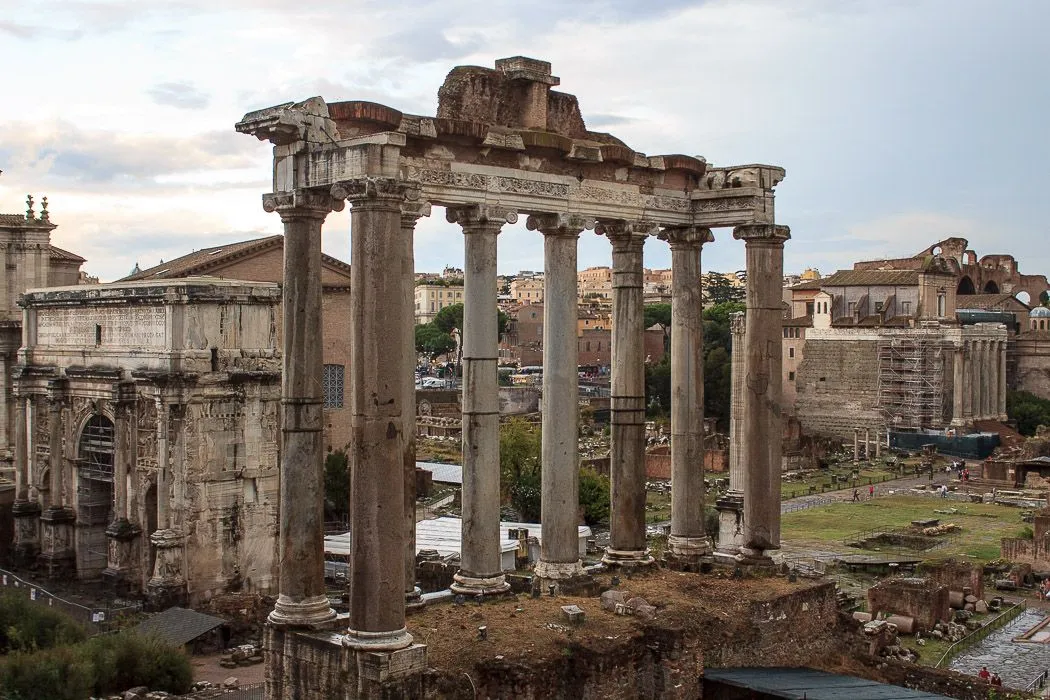 Photo: Temple of Jupiter on the Capitoline Hill, via i.pinimg.com
What the triumph understood — what Roman planners grasped intuitively — is that victory needs to be witnessed to be real. Winning in a distant field means nothing until it is performed in front of an audience. The procession was the proof.
How a Ritual Becomes a Reflex
Roman triumphs didn't survive the fall of the empire in any formal sense. But the underlying impulse — the need to physically traverse a public space after winning, to be seen by a crowd — never went away. Medieval jousting tournaments had victory circuits. Renaissance courts staged elaborate processions after military wins. The gesture kept reappearing because it responded to something fundamental in both the winner and the audience: a shared need to mark the moment with movement.
When the modern Olympic Games were revived in Athens in 1896, the organizers were consciously reaching back toward classical antiquity. They borrowed the marathon, the laurel wreath, and the stadium format. They didn't formally script a victory lap. But the conditions for one were already in place.
The moment that lodged the victory lap permanently into modern sports culture came at the 1908 London Olympics, though most historians point to a more dramatic crystallization in the 1930s. At the 1936 Berlin Olympics, Finnish runner Paavo Nurmi — already a legend from previous Games — had popularized the practice of acknowledging crowds after races in earlier competitions. But it was the spontaneous, emotionally raw celebrations of athletes in the 1930s and 1940s that began to make the post-victory circuit feel expected rather than exceptional.
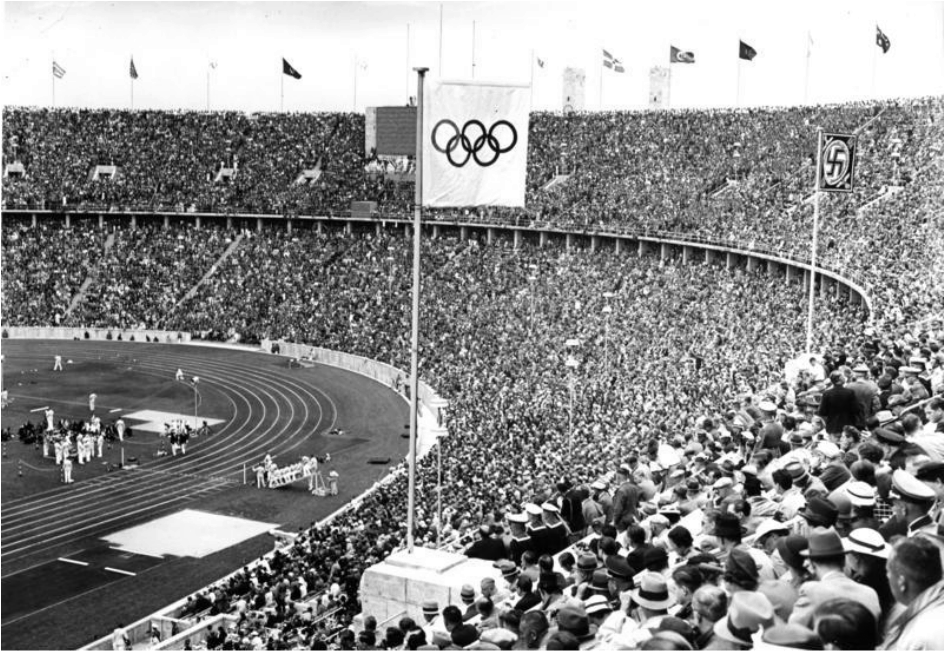 Photo: 1936 Berlin Olympics, via cdn.historycollection.com
The moment most often cited as the modern birth of the victory lap as a formal gesture belongs to Finnish runner Lasse Virén at the 1972 Munich Olympics, who after winning the 10,000 meters continued running an additional circuit of the track, flag in hand, saluting the crowd. The image — a solitary athlete moving through a roaring stadium — was broadcast globally and became the template that sports culture has replicated ever since.
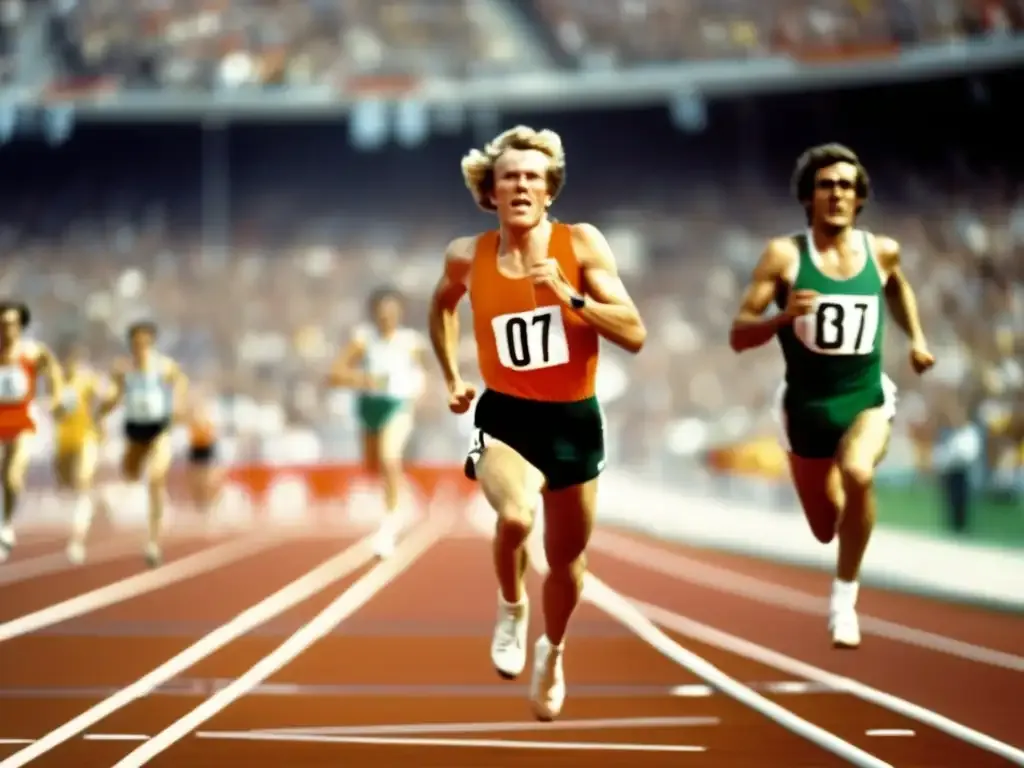 Photo: Lasse Virén, via vidasilustres.net
American Stadiums Made It Bigger
America didn't invent the victory lap, but it industrialized it.
American sports culture in the twentieth century was uniquely positioned to amplify athletic ritual into mass spectacle. Stadium architecture expanded. Television brought the image into every living room. And American broadcasters, trained to fill airtime and maximize emotional peaks, recognized that the post-victory circuit was exactly the kind of unscripted, emotionally authentic moment that cameras were built for.
NASCAR made the victory lap literal and mandatory — drivers circle the track after a win as a formal part of the event structure, often doing burnouts and waving from the window. The gesture became so standardized that missing it would feel like skipping the handshake at the end of a match.
In football stadiums, baseball parks, and basketball arenas, the equivalent moment — the athlete moving through the crowd's energy after a championship — became a television set piece. Directors knew to hold the shot. Commentators knew to go quiet. The athlete knew to raise their arms.
What looked spontaneous was, by the late twentieth century, a deeply rehearsed cultural script.
The Performance We Pretend Isn't One
There's something worth sitting with here. The victory lap feels like the most genuine, unfiltered moment in sports — pure emotion, no strategy, no coaching, no game plan. Just a human being moving through space, absorbing the reaction of thousands of other human beings.
But its entire history is a history of performance. Roman generals staged their triumphs months in advance. Olympic organizers built tracks with spectator viewing in mind. American broadcasters choreographed the camera angles. The athlete who raises their arms and starts running isn't inventing something new. They're stepping into a role that has been played, in one form or another, for more than two thousand years.
That doesn't make it less moving. If anything, it makes it more interesting. The fact that humans have been doing some version of this — winner moves through crowd, crowd responds — across radically different cultures, centuries, and continents suggests that the ritual is answering a need that goes deeper than any particular sport or stadium.
Victory, it turns out, has always needed an audience. And the audience has always needed to see the winner walk among them.
Rome figured that out first. America just added better lighting.