The Civil War's Gruesome Logistics Problem That Quietly Revolutionized American Medicine
Photo: Tablelegs6, CC0, via Wikimedia Commons
The Civil War's Gruesome Logistics Problem That Quietly Revolutionized American Medicine
The modern American hospital is a place of controlled temperature, antiseptic surfaces, and carefully managed sterility. It is, by any historical measure, an extraordinary environment — one that people now enter with a reasonable expectation of leaving alive. That expectation is recent. And part of what made it possible came from one of the most grim logistical crises the country has ever faced: figuring out how to send dead soldiers home.
What Hospitals Were Before the War
To understand the transformation, you have to understand what American medical facilities looked like in 1860. The answer is not reassuring.
Urban hospitals existed primarily to serve people who had no one to care for them at home — the poor, the transient, the abandoned. Wealthy Americans were treated at home by physicians who made house calls. The hospital was, culturally and statistically, a place associated with death rather than recovery. And for good reason: infection rates in surgical wards were catastrophic. Wounds that might be survivable under clean conditions routinely became fatal in the shared wards of pre-war hospitals.
The germ theory of disease was still being developed in Europe. Most American physicians in 1860 had no framework for understanding why patients who underwent surgery in hospitals died at far higher rates than those operated on at home. Ventilation was considered the primary variable — the dominant theory held that "bad air," or miasma, caused disease. The idea that invisible organisms on a surgeon's unwashed hands could kill a patient was not yet accepted practice.
Refrigeration, in any meaningful medical sense, was essentially nonexistent. Ice was harvested from frozen ponds in winter and stored in insulated cellars — a system that worked reasonably well for keeping food cold but had no application in medical settings.
The Problem That Arrived With the First Battles
When the Civil War began in April 1861, nobody had fully reckoned with the scale of what was coming. The first major engagement, Bull Run in July 1861, produced roughly 5,000 casualties in a single day. Families across the North demanded to know what would happen to the bodies of their sons, husbands, and brothers.
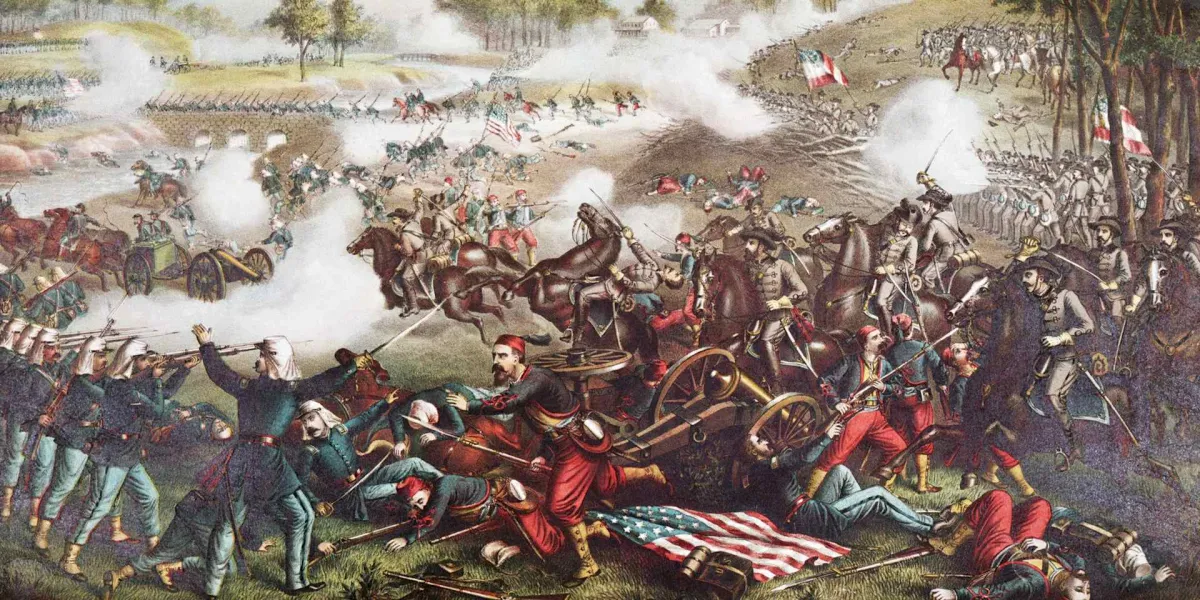 Photo: Bull Run, via res.cloudinary.com
The traditional military answer — burial near the battlefield — was unacceptable to a civilian population that expected to bring its dead home for proper funeral rites. But transporting bodies by rail, which could take days or weeks, required preservation. And the only preservation method then available was embalming.
Embalming as a widespread practice barely existed in America before the war. It had been developed in Europe as an anatomical tool, used by medical schools to preserve cadavers for dissection. Now, suddenly, there was an enormous demand for it as a funeral service.
Entrepreneurial embalmers — many of them with medical backgrounds — followed the Union Army into the field, setting up tents near field hospitals and offering their services to officers and enlisted men alike (at sharply different prices). The federal government eventually formalized the practice, appointing medical officers to oversee embalming operations.
What the Embalmers Learned — And Who Was Watching
Here is where the story takes its unexpected turn. The men doing this work were, in many cases, the same physicians and medical students who would return to civilian practice after the war. And the techniques they were developing — chemical preservation, the management of decomposition, the prevention of bacterial activity in tissue — were teaching them things about infection and contamination that the pre-war medical establishment had never systematically studied.
The primary embalming agent used was arsenic-based solution, later replaced by formaldehyde compounds. But the process required understanding why bodies decomposed — what was happening at a biological level that caused tissue to break down. Physicians working in this context were developing, through grim practical necessity, a working understanding of microbial activity that aligned with the emerging European germ theory they'd been skeptical of.
Meanwhile, the war itself was producing a parallel revolution in field surgery. The sheer volume of casualties — hundreds of thousands of wounded men moving through military hospitals — forced the Army Medical Corps to systematize in ways that had never been necessary before. Surgeons who might have operated on a handful of patients a year were now performing dozens of procedures a day. They tracked outcomes. They noticed patterns. They began to understand, even without the full theoretical framework, that cleaner conditions produced better survival rates.
Dr. Jonathan Letterman, the Army of the Potomac's medical director, reorganized the entire field hospital system — creating triage protocols, ambulance corps, and staged care that moved patients from the battlefield to increasingly sophisticated treatment environments. These weren't just wartime improvisations. They were the structural templates for civilian hospital organization that followed.
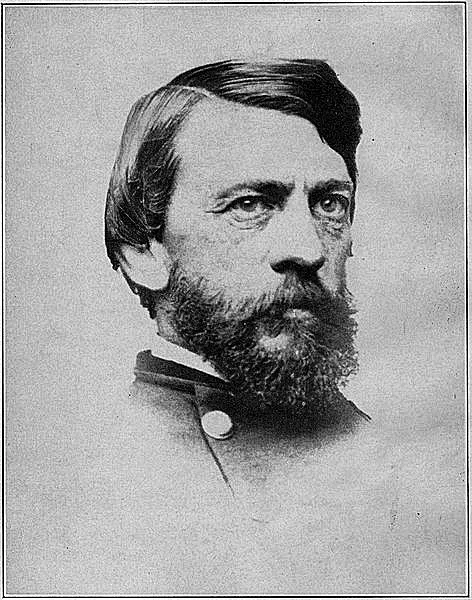 Photo: Dr. Jonathan Letterman, via ironbrigader.com
From Field to Ward
When the war ended in 1865, an estimated 11,000 physicians returned to civilian practice carrying four years of compressed medical experience. They brought with them a new seriousness about hospital organization, wound management, and the conditions under which surgery should take place.
The timing aligned with the rapid spread of germ theory in American medical circles through the late 1860s and 1870s. Joseph Lister's antiseptic techniques, developed in Britain, found a receptive audience in a generation of American physicians who had already intuited — through battlefield observation — that contamination was killing patients. The theory gave them the language to explain what they'd already seen.
Refrigeration technology, advancing rapidly after the war for commercial food preservation, was adopted into hospital settings by the 1880s. The connection to wartime embalming practices was direct: the same understanding of temperature's role in slowing biological decomposition that had made field embalming possible informed the design of hospital cold storage and, eventually, temperature-controlled surgical environments.
The Inheritance Nobody Talks About
The hygienic, climate-controlled, systematically organized American hospital that emerged by the early twentieth century didn't come from a single inventor or a clean eureka moment. It came from the accumulated pressure of an unprecedented crisis — 620,000 dead, families demanding their bodies back, surgeons overwhelmed with more cases than they could count.
The undertakers who followed the army into the field were solving a logistics problem. The surgeons managing field hospitals were surviving an emergency. Neither group was consciously building the future of American medicine.
But the knowledge they developed under those conditions — about contamination, temperature, systematic care, and the organization of medical facilities — flowed directly into the hospitals that Americans began, for the first time, to trust with their lives.
Every sterile surface and climate-controlled room carries that history. It just isn't the kind of origin story that gets put on a plaque.