She Built It to Make You Miserable — And America Made It a Classic
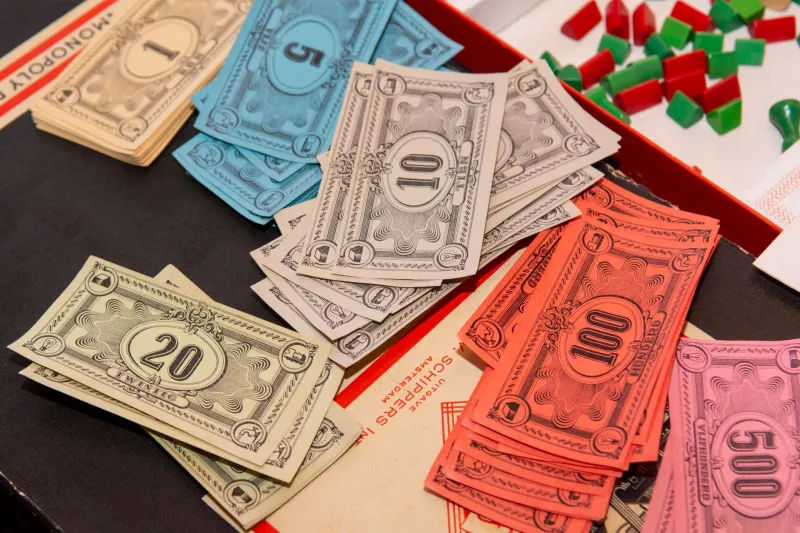
Somewhere in a closet across America, there's a battered Monopoly box with missing hotels, a dog token, and at least three properties nobody can remember the color of. It's a fixture of family life — a game so embedded in American culture that the phrase "passing Go" has become its own idiom. But almost nobody who's ever slammed down Boardwalk in triumph knows the name Elizabeth Magie. And that omission is, in a way, the whole point.
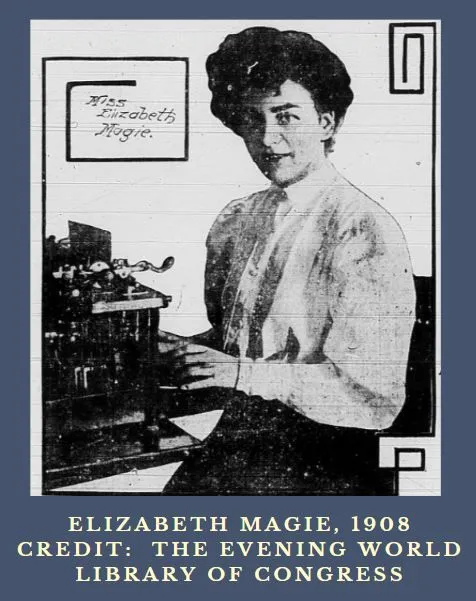 Photo: Elizabeth Magie, via static.wixstatic.com
The Woman With a Very Different Idea
In 1903, Elizabeth Magie was a progressive activist, writer, and self-described "single tax" advocate living outside Washington, D.C. She was a follower of economist Henry George, who believed that private ownership of land was the root cause of poverty — that landlords who collected rent without producing anything were essentially parasites draining wealth from working people.
Magie wanted to demonstrate this idea in the most visceral way she could think of. So she invented a board game.
She called it The Landlord's Game, and she patented it in 1904. The board was a loop of properties that players could buy and develop, collecting rent from anyone who landed on them. The more property you controlled, the more you bled your opponents dry. Sound familiar?
Here's the twist: that was the bad outcome. Magie designed the game with two sets of rules. One set, which she called the "Monopolist" rules, rewarded ruthless accumulation — and was meant to show players exactly how miserable that dynamic felt for everyone who wasn't winning. The other set, the "Prosperity" rules, rewarded collective success. She genuinely believed that once people felt the injustice of monopoly capitalism through play, they'd understand why Henry George's land tax reforms were necessary.
She wasn't trying to sell a bestseller. She was trying to start a political conversation.
The Game That Spread Without Her
For about three decades, The Landlord's Game circulated through progressive academic communities — Quaker groups, university towns, left-leaning neighborhoods in the Northeast. People hand-copied the boards, renamed the properties after their own streets, and passed the rules along informally. It was essentially open-source, long before that concept existed.
In Atlantic City, a local version emerged where the streets were renamed after real Atlantic City neighborhoods — which is why Boardwalk and Park Place are in New Jersey, not some fictional city. That version eventually made its way to a heating engineer in Philadelphia named Charles Darrow.
 Photo: Atlantic City, via c8.alamy.com
Darrow played the game, loved it, made his own version, and in 1935 sold it to Parker Brothers — presenting himself as the sole inventor. Parker Brothers paid him royalties for life. He became a millionaire. He's the man history remembers as Monopoly's creator.
Magie, when Parker Brothers eventually tracked her down and purchased her patent, received a flat payment of $500 and no royalties. No ongoing credit. No fortune.
What Parker Brothers Did Next
Here's where the story gets genuinely strange. Parker Brothers knew about Magie. They knew the game's actual origins. They bought her patent partly to eliminate any legal complications. But they had no interest in selling a game designed to illustrate the injustice of capitalism to a Depression-era America that was, coincidentally, desperate for entertainment and escapism.
So they stripped the political framing entirely. Gone were the dual rule sets. Gone was the educational intent. What remained was the "Monopolist" rules — the ones Magie had designed to make players feel bad — repackaged as the whole point of the game.
And America absolutely loved it.
During the Depression, families who were losing their actual homes could sit around the table and pretend to own railroads. The game sold 20,000 copies in its first week. By the end of 1935, Parker Brothers was producing 20,000 sets a day. The irony is almost too neat: a game invented to make people angry about economic inequality became the defining entertainment of an era defined by economic inequality.
The Reversal That Defines the Story
What makes the Monopoly origin story so remarkable isn't just the theft of credit — though that part is real and documented. It's the complete inversion of intent. Magie created a teaching tool designed to generate discomfort, and it became a source of joy. She built it to criticize the hoarding of property, and it became a game where hoarding property is the only goal. She wanted players to feel the system was unfair, and instead they felt like winners.
Academic Mary Pilon spent years researching this history and published The Monopolists in 2015, bringing Magie's story to a wider audience for the first time. It's a genuinely good book. But even now, most people who own Monopoly have never heard of it.
Why It Still Matters
There's something almost poetic about the fact that Monopoly — a game that routinely ends friendships, drags on for hours, and leaves most players feeling crushed and broke — was designed to feel that way. Magie got her wish, in a backwards sense. People do feel the misery of the monopolist dynamic every time they play. They just don't connect it to anything.
The next time you flip the board in frustration at hour four of a game that's going nowhere, consider this: that frustration was the whole point. You just didn't know who to blame.
Elizabeth Magie did.