The Australian Gym Class Discovery That Launched America's Living Room Revolution
The Dismissal That Cost Millions
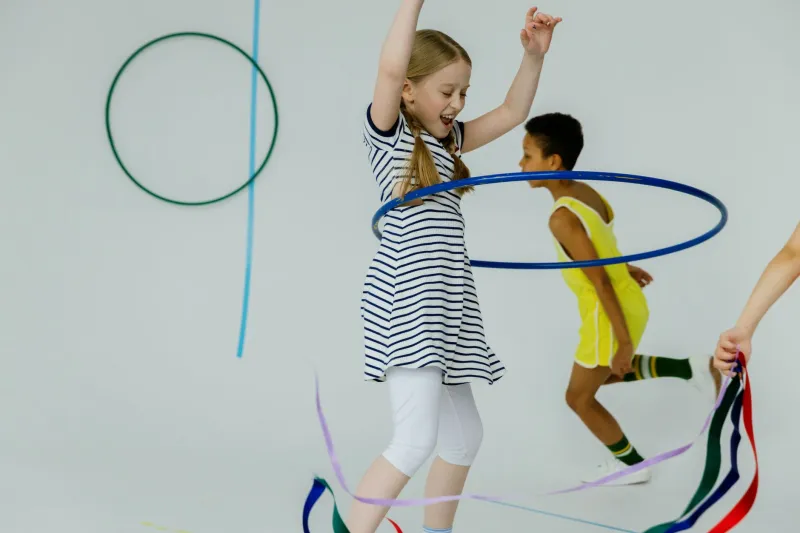
In 1957, a major American toy executive took one look at a simple plastic ring and declared it dead on arrival. "This will never sell," he said, dismissing what would become one of the fastest-selling toys in American history. Four months later, 25 million hula hoops had spun their way into American homes, proving that sometimes the biggest mistakes happen in boardrooms, not factories.
The story begins not in corporate America, but in Australian school gymnasiums, where children had been spinning bamboo rings around their waists for exercise. It was a simple concept—keep the ring moving through hip rotation—but it had never crossed the Pacific until two California entrepreneurs spotted something special.
From Bamboo to Plastic Gold
Richard Knerr and Arthur "Spud" Melin weren't looking to revolutionize fitness when they founded Wham-O in 1948. The duo had built their reputation on quirky items like slingshots and boomerangs, always hunting for the next unexpected hit. Their breakthrough moment came during a 1957 conversation with an Australian visiting California.
 Photo: Arthur "Spud" Melin, via d2j6dbq0eux0bg.cloudfront.net
 Photo: Richard Knerr, via i.pinimg.com
The visitor casually mentioned the bamboo exercise rings popular in Australian schools, demonstrating the hip-swiveling motion that kept them aloft. Knerr and Melin watched, transfixed. Here was something that combined play with physical activity—a concept virtually unknown in American toy aisles.
Within weeks, they had transformed the concept entirely. Gone was the heavy bamboo, replaced with lightweight, colorful plastic that could be mass-produced. They called it the "Hula Hoop," borrowing from the Hawaiian dance that shared similar hip movements. The name itself was marketing genius—it connected an unfamiliar Australian exercise tool with the exotic allure of Hawaiian culture that had captivated mainland America since statehood.
The Four-Month Phenomenon
What happened next defied every prediction. Wham-O began production in early 1958, and within four months, they had sold 25 million units. To put that in perspective, that's roughly one hula hoop for every seven Americans alive at the time. Factories couldn't keep up with demand. Plastic suppliers scrambled to meet orders. The toy that "would never sell" was generating $45 million in revenue faster than anyone could count it.
The hula hoop's success wasn't just about the toy itself—it was about timing. America in 1958 was experiencing unprecedented suburban growth, with families moving into homes with actual backyards. Television was bringing new forms of entertainment into living rooms, but parents worried about sedentary children. The hula hoop offered a perfect solution: active play that didn't require expensive equipment or special facilities.
America's First Fitness Fad
Something remarkable happened as hula hoops spread across the country—adults started using them too. What began as children's play equipment evolved into America's first mass fitness craze. Suburban mothers discovered that ten minutes of hula hooping provided a genuine workout, burning calories while having fun. It was exercise disguised as play, fitness without the intimidation of gymnasiums or formal programs.
The cultural impact rippled outward. Hula hoop contests appeared at county fairs and school events. Television variety shows featured hula hoop demonstrations. The simple act of keeping a plastic ring spinning around your waist became a shared national experience, connecting suburban neighborhoods through a common, slightly ridiculous activity.
The Lesson in the Living Room
By 1959, the initial craze had faded, but the hula hoop had accomplished something unprecedented. It had proven that Americans would embrace fitness activities that felt like fun rather than work. This insight would later influence everything from aerobics videos to home exercise equipment, establishing the template for making physical activity accessible and enjoyable.
The toy executive who dismissed the hula hoop as a fad wasn't entirely wrong—the initial mania did fade. But he missed the bigger picture. The hula hoop had introduced a generation of Americans to the concept that exercise could happen anywhere, require minimal equipment, and actually be enjoyable. It was the beginning of America's relationship with casual fitness, the ancestor of every workout video, fitness app, and backyard exercise routine that followed.
Today, hula hoops remain a fixture in toy stores and fitness studios alike, a reminder that sometimes the most revolutionary ideas come disguised as simple fun. The Australian gym class discovery that became America's living room revolution proved that the best fitness innovations often happen when we stop thinking of exercise as work and start thinking of it as play.