The Root That Got Lost in Translation — and Accidentally Funded a Nation
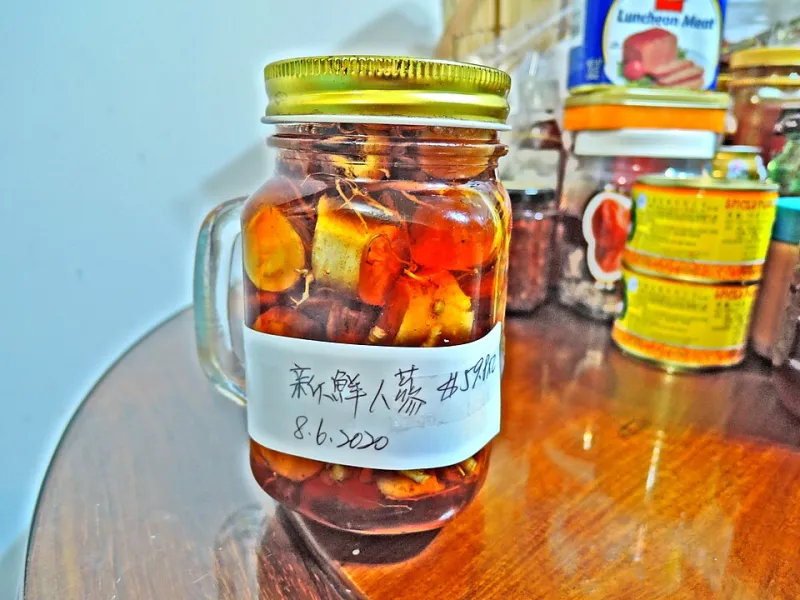
Photo: Peachyeung316, CC BY-SA 4.0, via Wikimedia Commons
Walk down the supplements aisle of any American pharmacy or health food store and ginseng is impossible to miss. It's in capsules, powders, teas, energy shots, and face creams. The global ginseng market is now worth billions, and in the United States alone, it's become one of the most recognized names in natural wellness. People take it for energy, focus, immunity, stress. Some swear by it. Some barely know what it is but buy it anyway because it sounds ancient and authoritative.
And in a way, that vague sense of authority makes perfect sense — because ginseng's journey to the American wellness shelf began with a case of mistaken identity that crossed two continents, involved French Jesuit missionaries, and accidentally helped finance some of the earliest American trade in recorded history.
A Plant, a Priest, and a Very Long Letter
The story starts not in America but in China, where ginseng — specifically Panax ginseng — had been prized for thousands of years. Traditional Chinese medicine considered it a near-miraculous root, useful for everything from fatigue to longevity. Demand was intense and supply was finite. By the early 1700s, Chinese merchants were paying extraordinary sums for quality root, and the supply from Manchuria was struggling to keep up.
In 1714, a French Jesuit missionary named Father Jartoux, stationed in China, sent a detailed letter back to Europe describing the plant and its properties. He made an observation that would echo across the Atlantic: wherever the conditions matched those of Manchuria — cool climate, hardwood forests, rich soil — there might be a similar plant growing wild. His letter reached another Jesuit, Father Joseph-François Lafitau, who was stationed in Quebec.
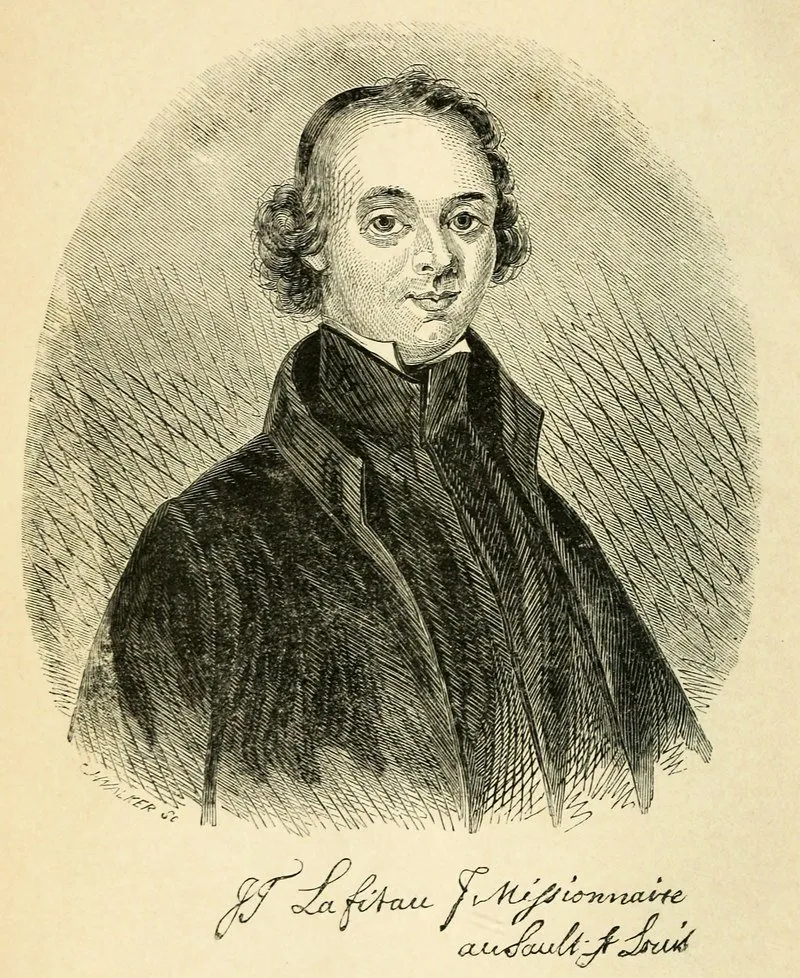 Photo: Father Joseph-François Lafitau, via www.aqaf.fr
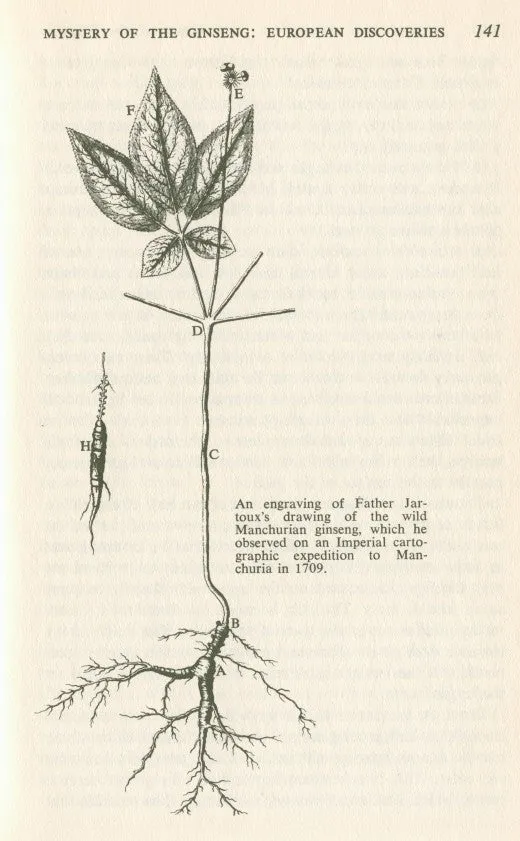 Photo: Father Jartoux, via hsuschinaoversea.com
Lafitau looked around him at the forests of eastern Canada and started digging.
The Wrong Plant in the Right Place
What Lafitau found in 1716 was Panax quinquefolius — American ginseng. It was related to the Chinese variety but botanically distinct, a native of the eastern woodlands stretching from Canada down through the Appalachians and into what would become the American South. Indigenous peoples — including the Haudenosaunee and various Algonquian nations — had been using it for generations, though not quite in the same way Chinese medicine employed its Asian cousin.
But to European traders, and crucially to Chinese merchants, the distinction was either unknown or unimportant. The root looked similar. It tested similarly. And there was an ocean of it growing freely in North American forests, waiting to be harvested.
The mispronunciation problem came in almost immediately. "Ginseng" itself is an anglicized corruption of the Chinese rénshēn, meaning roughly "man root" — a reference to the plant's vaguely humanoid shape. Colonial traders adopted the name wholesale, applied it to the American variety, and the two plants became, commercially speaking, the same thing. The botanical mistaken identity was baked into the transaction from the start.
The Root That Helped Build Early American Trade
What followed was one of early America's most significant commercial booms. By the mid-1700s, ginseng harvesting had become a serious industry across the colonial frontier. Trappers and settlers who might otherwise have little to trade suddenly had access to a product the Chinese market desperately wanted. Merchants from Montreal to Philadelphia were shipping tons of dried root across the Pacific.
The scale of it is hard to overstate. In 1773 — the same year as the Boston Tea Party — a young Daniel Boone organized a ginseng harvesting expedition through the Appalachians. George Washington noted in his diary that he encountered men hauling ginseng through the Virginia wilderness. Even in the earliest years of the republic, the root was a legitimate economic engine in rural America, one of the few commodities that could reliably generate hard cash in communities that had little else to sell.
The irony is that almost nobody in America was consuming it. It was purely an export product — harvested here, valued elsewhere. The plant that would one day line American supplement shelves was, for its first century of commercial life in this country, entirely invisible to the people who gathered it.
From Export Crop to Wellness Icon
The shift from trade commodity to domestic product happened gradually, accelerating through the nineteenth and early twentieth centuries as interest in "natural" remedies grew alongside industrialization. Patent medicine salesmen added ginseng to tonics. Herbalists promoted it. As Asian immigration brought traditional medicine practices into American cities, the root's reputation for boosting energy and resilience began filtering into mainstream awareness.
By the time the modern wellness industry took shape in the 1970s and 1980s — riding waves of counterculture interest in natural health, Eastern medicine, and alternatives to pharmaceutical solutions — ginseng was perfectly positioned. It had the lineage. It had the mystique. And it had the name recognition that came from two centuries of being vaguely, persistently present in American commercial life.
Today the United States is one of the world's largest exporters of American ginseng — still shipping it to Asia — while simultaneously importing processed ginseng products from Korea and China to sell in domestic health stores. The trade loop that Father Lafitau accidentally opened in a Quebec forest in 1716 is still spinning.
The Lesson Hidden in the Root
What ginseng's story reveals is how powerfully a name — even a mispronounced, misapplied one — can shape economic reality. The plant became valuable in America not because Americans understood it, but because a chain of accidental connections gave it credibility in a market that did. A missionary's letter, a colonial priest's curiosity, a trader's approximation of a foreign word — and suddenly a forest weed became a financial lifeline for frontier communities and, centuries later, a fixture in every wellness aisle in the country.
Not bad for a case of mistaken identity.