A Teenager's Leftover Paper and the Death of the Handwritten Letter
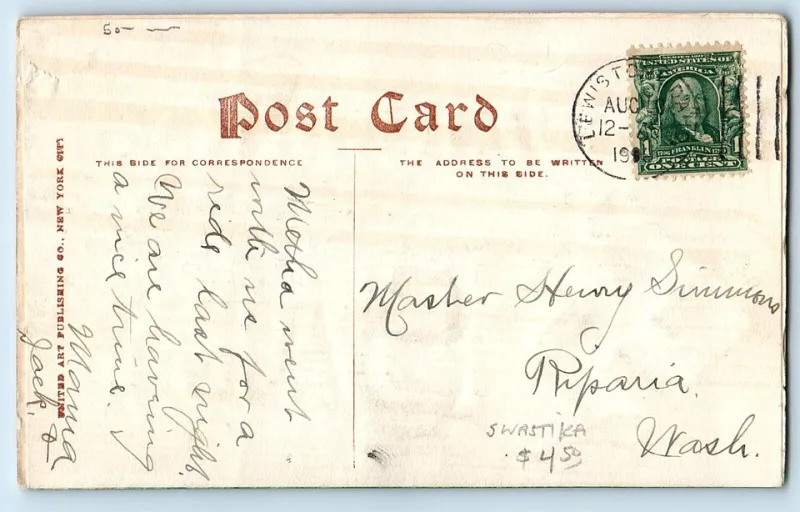
Photo: Unknown (unidentified) designer, Public domain, via Wikimedia Commons
A Teenager's Leftover Paper and the Death of the Handwritten Letter
Somewhere in your home right now there is probably a drawer, a box, or a shelf where old greeting cards live. Birthday cards from your mother. A Christmas card from a neighbor you haven't seen in years. Maybe a condolence card from a colleague, its message carefully chosen and slightly impersonal in the way those messages always are. You kept them because throwing them away felt wrong, even though the sentiment inside was printed by a stranger and signed by someone who may not have written a single original word.
This is not how it was supposed to work. For most of American history, a printed card was considered a poor substitute for genuine communication — the kind of thing you sent when you couldn't be bothered to actually write. The fact that it is now the default, the expected, the emotionally loaded centerpiece of every holiday and life event, is not an accident of culture. It is the result of a specific business decision made by a specific teenager in a Kansas City boarding house in 1910.
 Photo: Kansas City, via images.fineartamerica.com
What Proper People Did Instead
To understand why the greeting card industry is surprising, you have to understand what it replaced.
In Victorian and Edwardian America, personal correspondence was both a social obligation and a genuine art form. Educated people were expected to write letters — real ones, with full sentences and considered language — to mark important occasions in the lives of people they cared about. A birthday, a wedding, a bereavement, a new year: all of these called for a written note that demonstrated effort, affection, and a degree of literary competence.
Printed cards did exist in the mid-1800s. Louis Prang, a German-born lithographer working in Boston, began producing elaborate chromolithographed Christmas cards in the 1870s and is often credited with introducing the commercial Christmas card to the American market. They were beautiful objects, more like small works of art than modern greeting cards, and they sold well as novelties. But the cultural consensus remained firm: a printed card was a supplement to a letter, not a replacement for one. Sending only a card — no personal message, no real words of your own — said something unflattering about how much you valued the recipient.
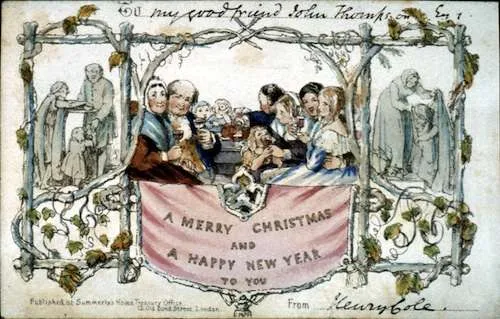 Photo: Louis Prang, via newenglandhistoricalsociety.com
This was the world Joyce Clyde Hall arrived into.
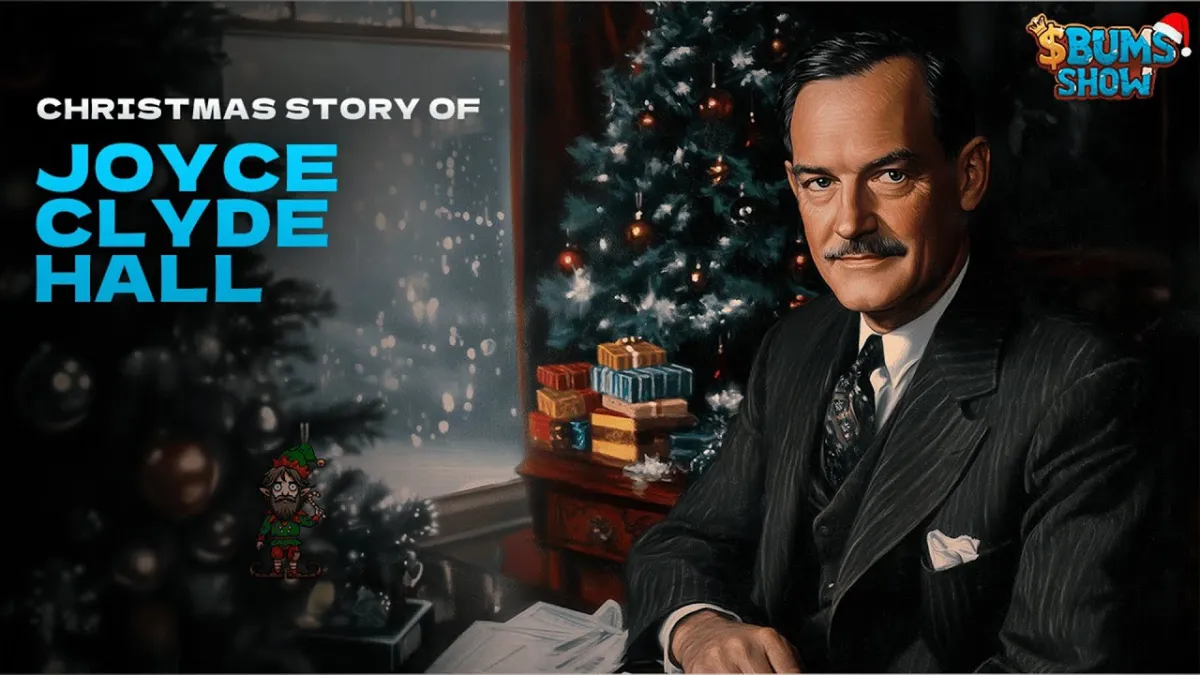 Photo: Joyce Clyde Hall, via i.ytimg.com
The Shoebox That Started Everything
Hall was eighteen years old when he left his home in David City, Nebraska, in 1910 and took a train to Kansas City, Missouri. He arrived with almost nothing except a shoebox packed with picture postcards — the kind that had been popular since the turn of the century, featuring scenic photographs, illustrated greetings, and holiday imagery. He'd been selling them by mail as a small side business back home and figured a bigger city meant a bigger market.
He set himself up in a room at the Kansas City YMCA and began distributing his postcards to local drugstores and bookshops on consignment. The business worked, slowly at first, and then with increasing momentum as he expanded his inventory and brought his brother Rollie in as a partner. By 1912, the Hall brothers had their own small publishing operation, producing their own cards rather than reselling other people's.
Then, in 1915, their entire inventory burned in a warehouse fire. It was a catastrophic setback. To rebuild, they borrowed money and started over — this time focusing on a different product format. The picture postcard market had grown crowded and competitive. What Hall noticed, watching his customers, was that people sometimes wanted to say something more private than a postcard allowed. Postcards were open — anyone handling the mail could read them. An envelope changed that.
Hall pivoted to folded cards that fit inside envelopes. They were larger, allowed for longer printed messages inside, and offered the sender a degree of privacy. The format also allowed for something the postcard hadn't quite managed: a separation between the decorative outside and the personal space within, where a sender could add their own handwritten note if they chose — or simply sign their name if they didn't.
That last option turned out to be the key.
Convenience Dressed Up as Sentiment
What Hall understood, perhaps intuitively at first and then with increasing commercial clarity, was that most people wanted to acknowledge the people in their lives but found the blank page genuinely difficult. Writing a letter required not just time but a kind of emotional confidence — you had to find the right words, strike the right tone, express something true without being mawkish or awkward. For many people, that was hard.
A printed card solved the problem. Someone else had already found the words. The sender just had to choose the card that felt right — which was its own small act of consideration — and sign their name. The gesture was real even if the language was borrowed.
Hall's genius was in making that transaction feel like enough. His company, which became Hallmark in 1928, invested heavily in the quality and emotional resonance of the messages inside its cards. He hired writers specifically to craft sentiments that felt personal without being too specific — words that could apply to almost any relationship while still reading as genuine. The goal was to make the recipient feel seen, not to remind them that a stranger had written the message.
The strategy worked beyond anything Hall could have anticipated. By the mid-twentieth century, Hallmark cards were a fixture of American life. The company eventually opened its own retail stores, created a television channel, and built a brand so synonymous with emotional sincerity that "Hallmark moment" became a phrase used to describe genuine human warmth.
What We Actually Traded Away
The greeting card industry in the United States today generates roughly $7 billion a year. Americans purchase approximately 6.5 billion cards annually — more cards per capita than any other country on earth. The handwritten personal letter, by contrast, has become so rare that receiving one feels like a minor event.
None of that happened because people stopped caring about each other. It happened because a teenager with a shoebox figured out that convenience, packaged with enough sincerity, is almost always what people choose when given the option. The Victorian letter-writers weren't more loving. They just didn't have an easier alternative.
Now we do. And we sign our names at the bottom and mean every word someone else wrote.