The Waffle Vendor's Desperate Fix That Quietly Rewired How America Eats

The Waffle Vendor's Desperate Fix That Quietly Rewired How America Eats
There's a decent chance you've eaten something while walking today. Maybe it was a burrito wrapped in foil, a slice of pizza folded in half, or a coffee cup clutched between your palms while you navigated a crosswalk. Eating on the move feels completely natural to Americans — almost like a birthright. But for most of human history, it wasn't normal at all. Meals were events. You sat down. You used a plate.
Somewhere between then and now, something changed. And it changed, of all places, at a World's Fair in St. Louis on a sweltering summer afternoon in 1904.
 Photo: St. Louis, via i.pinimg.com
A Fair, a Frenzy, and a Shortage Nobody Planned For
The Louisiana Purchase Exposition of 1904 was one of the largest events in American history. Millions of visitors flooded into St. Louis over the course of the summer, wandering between exhibition halls, novelty demonstrations, and rows of food vendors selling everything from roasted corn to exotic foreign dishes. It was, in many ways, the original American food festival.
Among those vendors was Ernest Hamwi, a Syrian immigrant who had set up a stall selling zalabia — thin, crispy waffles cooked on a hot iron and dusted with sugar. They were good. People liked them. But in the heat of the Missouri summer, the real draw was the ice cream stall next door, which was doing extraordinary business.
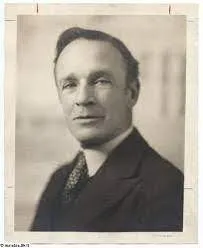 Photo: Ernest Hamwi, via www.aa-times.com
Then the ice cream vendor ran out of plates.
In the middle of a packed afternoon, with a line of customers and no clean dishes to serve from, the vendor was stuck. Hamwi, watching from his neighboring stall, did the thing that pragmatic people do when they have a problem and a product nearby: he improvised. He rolled one of his warm waffles into a cone shape, let it harden, and handed it over. The ice cream scooped right in. Customers could hold it, walk with it, and eat it without needing a single piece of crockery.
It worked so immediately and so obviously well that within hours, other vendors at the fair were doing the same thing.
Not One Person's Idea — But One Moment's Invention
Historians will point out, correctly, that Hamwi wasn't the only person at that fair who claims credit for the ice cream cone. At least half a dozen vendors — including Charles Menches, David Avayou, and Abe Doumar — have been cited in various accounts as the true originator. The 1904 World's Fair was, apparently, a place where multiple people independently had the same desperate, brilliant idea at roughly the same time.
What that tells you isn't that the history is murky. It tells you that the need was real. Portability was a genuine problem that the fair's chaotic, crowd-heavy environment exposed all at once. The cone wasn't one person's eureka moment — it was a collective response to a practical crisis, which is often how the most durable inventions actually happen.
By the time the fair closed, the ice cream cone was already spreading. Hamwi himself went on to found the Cornucopia Waffle Company, one of the first commercial cone manufacturers in the country. Within a decade, cone-making machines had been patented and factories were producing them at scale.
From Novelty to Normal
What happened next is where the story gets genuinely interesting, because the ice cream cone didn't just become a popular dessert format. It quietly introduced an entirely new relationship between Americans and their food.
Before the cone, eating in public — while standing, while walking, without utensils — was considered somewhat improper. Meals belonged to tables. Street food existed, certainly, but it was largely associated with the working class and with necessity rather than leisure. The cone changed that framing. Here was a treat — something enjoyed for pleasure, not survival — that was designed to be held in your hand and consumed while you moved.
That reframing mattered enormously. Once people accepted that a pleasurable food experience didn't require a seat and a plate, the conceptual door to an entire industry swung open. The hot dog in a bun, the hamburger wrapped in paper, the paper cup of soda — all of these formats owe something to the cultural permission the ice cream cone quietly granted.
When White Castle opened its first location in 1921, and when drive-in restaurants began appearing in the 1930s, they were building on an assumption that Americans had already absorbed: that eating while moving was not just acceptable, it was appealing. The cone hadn't invented fast food, exactly. But it had made the idea imaginable.
The Billion-Dollar Afterthought
Today, the American fast food industry generates over $350 billion a year. Drive-throughs, food trucks, grab-and-go counters, app-ordered delivery — all of it runs on the foundational logic that eating doesn't require stillness. That logic has become so embedded in American culture that we rarely question it.
And yet it traces back, at least in part, to a Syrian immigrant at a summer fair who looked at his neighbor's problem and saw a solution sitting right on his waffle iron.
The ice cream cone is still around, of course. Americans consume billions of them every year. But its real legacy isn't in the dessert aisle. It's in the drive-through lane, the food truck window, and the breakfast sandwich you ate in the car this morning without thinking twice about it.
Some inventions change what we use. This one changed how we think about when and where eating is allowed to happen — and that turns out to be a much bigger deal.